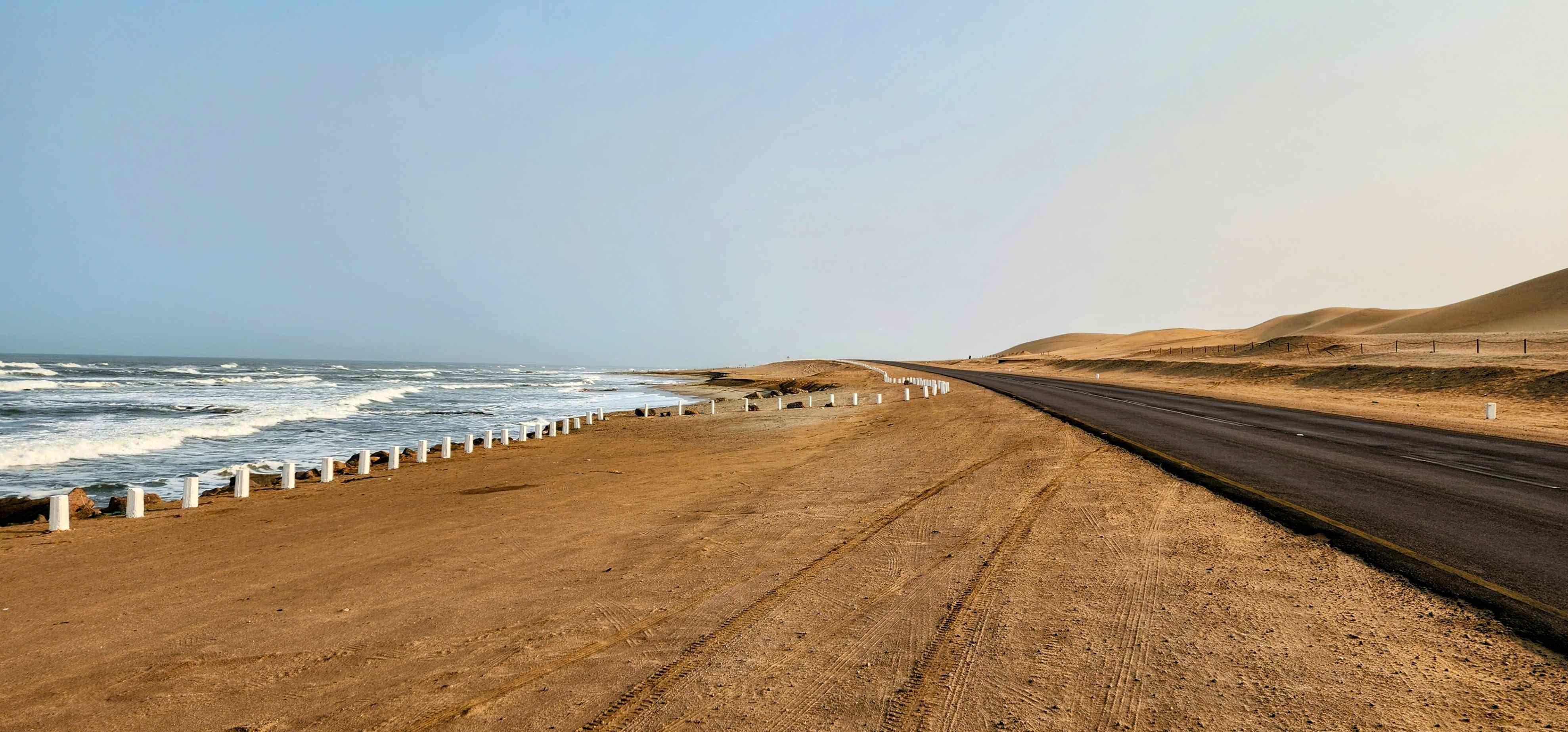
With our incredible safari experiences in Etosha National Park now a treasured memory, it was time to shift gears and point our camper south. We embarked on a long, scenic drive that would lead us through dramatically different landscapes, eventually culminating in a visit to the captivating African coast of the Atlantic Ocean. Our destination: the charming, distinctive city of Swakopmund.
Swakopmund, aptly meaning “mouth of Swakop” (referring to the major river of the region, though often dry), is a coastal city located in western Namibia. For us, it served as a much-needed interlude and a strategic halfway point to our next major desert destination. What makes Swakopmund so unique is its striking location: it’s a vibrant beach resort town literally nestled at the very edge of the vast and ancient Namib Desert. The contrast between the rolling dunes and the crashing Atlantic waves is truly something to behold.
The city itself boasts a rich and visible history. Swakopmund was founded in 1892 by the German colonial administration as the main harbor for German South West Africa, designed to be independent of the British-controlled port of Walvis Bay further south. This colonial heritage is still deeply embedded in the city’s architecture and atmosphere, giving it a distinctly European feel with its Bavarian-style buildings, palm-lined streets, and even a historic lighthouse.


Our time on this particular stretch of the coast was brief, and surprisingly, it was chilly and very windy! A stark contrast to the dry heat of the interior, the cool Atlantic breeze was a refreshing, if somewhat bracing, change. Despite the brisk weather, we managed to squeeze in a delightful experience: finding a cozy restaurant that offered an amazing seafood meal complimented by a stunning sunset view over the ocean. There’s something incredibly therapeutic about fresh seafood and the vastness of the Atlantic after days in the dust of the bush.
Finally, no trip to the beach, no matter how brief or blustery, is complete without dipping your fingers in the ocean. And so we did, letting the icy Atlantic water wash over our hands. This simple act of connection with the vast ocean holds a particularly poignant memory for us, as it’s where one of Angus’s very last photos would ever be taken. A quiet moment that became profoundly significant in hindsight.
Swakopmund provided a fascinating, if fleeting, coastal interlude on our otherwise desert-dominated journey. Its unique blend of German colonial charm, desert proximity, and bracing Atlantic air made it a memorable stop.
From the cool, windswept coast, our adventure now turns back inland, plunging deep into the heart of the ancient sands. Next, we prepare for the iconic “Exploring the Namib Desert: A Guide to Sossusvlei and Deadvlei,” home to some of the world’s most breathtaking desert landscapes.
Previous <— This entry is part of a trip. Continue the story? —> Forward
Helpful Links
- Travel Guides: Since this was a self-drive road trip in a very sparse part of the world, I actually have several tools to share here. I cannot suggest Tracks4Africa enough.
- Namibia Self-Drive Guide by Tracks4Africa
- Namibia Map by Tracks4Africa
- Insight Guides Namibia (Travel Guide with Free eBook): I actually use these more and more over Lonely Planet these days.
- Tiger Reef Campsite – Own home for the night on the ocean.
Stepping Thru Our Story:
- Exploring Southern Africa: A Journey Through Namibia and Botswana
- Understanding Johannesburg’s Complex Past and Present
- Exploring Soweto: A Walking Tour Through History
- A Journey through Windhoek: History and Highlights
- Camping Under the Stars in Botswana’s Kalahari Desert
- Discover Wildlife in the Okavango Delta: Canoe and Safari Experiences
- Exploring Wildlife in Chobe National Park
- Navigating Chobe’s Sand: A Journey Through Savuti
- Explore Chobe Riverfront: A Wildlife Paradise
- Victoria Falls: The Mighty Wonder Between Zimbabwe and Zambia
- Exploring Victoria Falls: A Guide to Zambia’s Hidden Gems
- Driving the Caprivi Strip
- Exploring Namibia’s Etosha National Park
- Exploring Etosha: Elephants and Conservation Stories
- A Scenic Journey to Swakopmund from Etosha National Park
- Exploring the Namib Desert: A Guide to Sossusvlei and Deadvlei
- Lost in Namibia: A Travel Experience to Remember


Leave a Reply