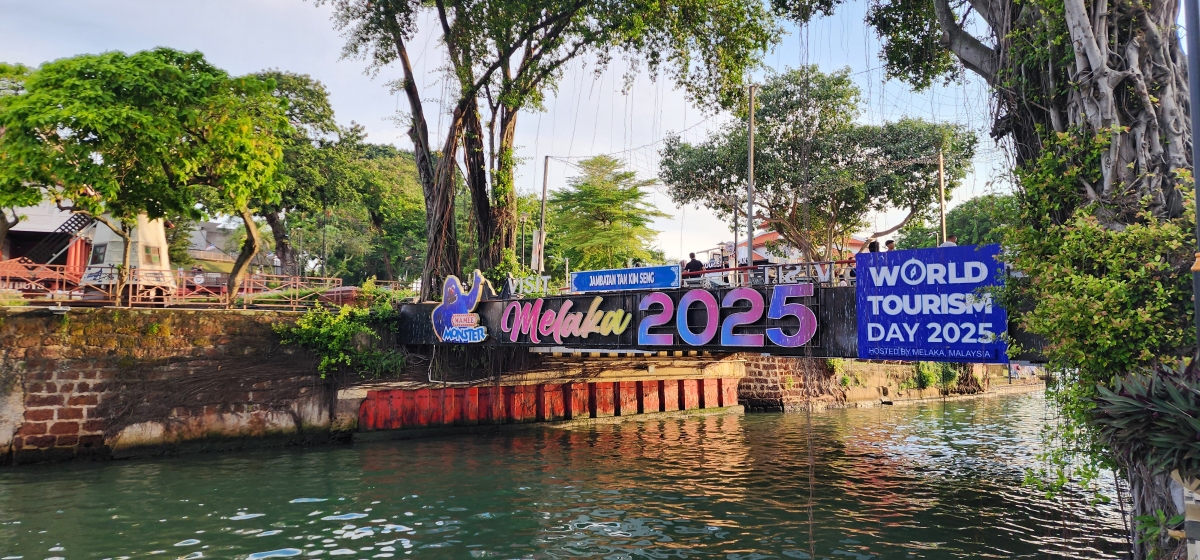
A few months back, I had the terrific opportunity to spend some time working in Southeast Asia: Malaysia and Singapore. Spending most of my time in the lush city of Kuala Lumpur (KL), I was able to take a little time before returning home to visit Malacca and Penang Island, both USESCO World Heritage Sites, where I was able to learn a lot about Malaysia’s past, present, culture and food.
Jump to something good:
- Is Malacca Worth Visiting?
- How to Get to Malacca.
- A Little History of Malacca.
- Day 1 in Malacca: Jonker Street, Dutch Square & Colonial Landmarks.
- Evenings in Malacca.
- Day 2 in Malacca: Museums, Peranakan History & Sultanate Palace.
- Where to Stay in Malacca?
- What & Where to Eat: Malacca’s Essential Food Guide.
- When to Visit Malacca?
- Helpful Links.
Is Malacca Worth Visiting?
I would struggle to answer “no,” to this question with most (but not all) any place(s) that I have been to, so the answer is “yes.” The better questions would be to ask why, and how long?
Starting with the “why,” I think that my favorite reason to visit was to get greater exposure into Malay history, both ancient and modern. Malacca provides a wealth of information into the region’s history and country’s origin given its importance and strategic location so many years before Malaysia was established as its own nation.
As for “how long,” I think that for many, the two days that I spent would be sufficient, with a strong preference on the weekend. A day tour, or even a single full day with overnight from Kuala Lumpur would just not be enough to properly see what the city has to offer. If I had had the time, I would have appreciated adding a day or two to get out of the historic area a bit more to the number of other sites that were available. All of this to say, I would suggest 3-4 days, with 3 nights to allow yourself the ability to visit without feeling rushed.
How to Get to Malacca.
Malacca (Melaka in Malay) is located on the west coast of peninsular Malaysia, about a 1.5 – 2-hour bus or car ride from Kuala Lumpur (KL). From KL Sentral, I took the easy and pleasant bus ride to Malacca, and on my way back, I took a direct bus to Kuala Lumpur International Airport (KLIA). There are multiple direct buses that run to/from each day.
I purchased my ticket to Malacca at the bus station in KL, which is the easiest and least expensive. For my return to the airport, I purchased my ticket online since I had a flight to Penang that I was catching. The online ticket price was a little higher and I still had to check in at the desk to get my actual ticket. For the teller to print out my ticket, I was charged a small fee again; if you do this, have some coins handy.

The bus station is located in Malacca Sentral, which is a good 4-5 km from the historic area of the city. The ride-sharing app, Grab, provided a quick ride to my hostel. Once you are in the historic center, most of the sites are very walkable.
- If you do want to book your bus in advance, you can book with redbus.my.
- For more of the basics and key information (currency, language, etc.) on visiting Malaysia, you can view my Malaysia Travel Guide.
A Little History of Malacca.
Malacca was once a fishing village, but due to its very strategic position at the narrowest point in the Strait of Malacca, it transformed into an international port by compelling passing ships to call there and establishing fair and reliable facilities for warehousing and trade. Most all ships that intended to sail to/from the East (China, Japan, etc.) and the West (India, Persia, Africa, etc.) would pass through this alleyway to not have to sail around the bulk of present-day Indonesia.
Malacca’s strategic location brought it allies, such as China who protected the Malacca Sultanate from Siam (present-day Thailand), and conquerors, such as European colonialists. The Portuguese were the first Europeans, seeking to dominate the Asian trade routes. While not entirely successful in owning the great trade network, the Portuguese did bring their own influence on the region in their 130-year control (1511 – 1641). The Fortaleza de Malacca (“Fortress of Malacca”) was once a massive and powerful Portuguese fortress constructed to defend their colonial interests and control the spice trade in Southeast Asia. Today, the remaining fortified gate is the most iconic and prominent physical legacy of the Portuguese fort in Malacca.
Next, the Dutch came and ruled Malacca from 1641 to 1798, but they were not interested in developing it as a trading center, placing greater importance on Batavia (Jakarta) and Java as their administrative center. The Dutch improved and expanded the fortress and built many historical buildings that remain today, including Stadthuys (town hall), which served as the administrative center of the colony. The influence is also noticeable in the homes of the older streets as the houses are very narrow and deep since the Dutch taxes were historically based on a house’s width along the street frontage. Malacca was eventually ceded to the British who ruled from 1824 – 1942, first by the East India Company and then as a crown colony. Malacca went briefly under the rule of Empire of Japan between 1942 and 1945 during World War II. After the war, Malaysia was eventually formed in 1963.
It was this history that I wanted to learn more about and get to experience in my two short days in Malacca.
Day 1 in Malacca.
For the first full day in Malacca, I walked the historic area to get my bearings. Since this area of town is smaller, it is easy to spend a more causal day of walking and taking in the history of the area and the architecture it delivers.
Jonker Street

Since my hostel was just around the corner, my exploration began at Jonker Street (Jonker Walk). During day, the street offers a clear view of its 17th-century heritage, lined with the ornate facades of traditional shophouses. buildings were once the homes of the wealthy Peranakan families, serving as the residential heart of old Malacca.

The street has evolved significantly from its quiet past. While historically renowned for high-end antique shops, Jonker Street has succumbed to a degree of gentrification. Today, genuine antique dealers and craftspeople sit shoulder-to-shoulder with souvenir stands, clothing stores, and even major chains like Hard Rock Cafe. The local essence remains if you look closely amidst the stalls selling t-shirts and magnets.
The energy shifts dramatically on weekends when the Jonker Walk Night Market takes over. The road closes to traffic, filling with the sounds of buskers and the humidity of the crowd. For me, the true entertainment was not the performance artists, but the street food vendors. Watching cooks expertly hand-roll Chicken Rice Balls or toss noodles in woks is a performance in itself.
Malacca River

Once reaching the end of the street, you intersect with the Malacca River, which flows through the middle of the city. The river that was once major trade artery during the heyday of Malacca Sultanate in the 15th century is now a major tourist attraction. The riverwalk is lined with shops and restaurants. I found it pleasant to grab a beer and people watch for a while as I hid from the heat in the middle of a September afternoon. You can take river cruises, both in the day and evening, but I did not get a chance to take one.
Dutch Square

Once crossing the river, you arrive at the Dutch administrative center of town, and probably the city’s most famous landmark. Dutch Square, also known as Red Square, is where you can see Stadthuys. Completed in 1660, it is a reproduction of the former Stadhuis (town hall) of the Frisian town of Hoorn in the Netherlands which existed from 1420 until 1796. Now, it houses the Museums of History and Ethnography and is one of the oldest Dutch buildings in the East.
Dutch Square has a lot more than the former Town Hall, however. Christ Church is also here. The church was built from 1741 – 1753, replacing the shattered Portuguese church. The bricks were shipped over from the Netherlands on boats that would replace that weight with fine goods from the East returning to Europe. Christ Church is the oldest protestant church in Malaysia. On this square you will also find the Tang Beng Swee Clock Tower, which looks Dutch, but it is not. It was built in 1886. The buildings in the square were originally white, but the British governor had them painted in a deep red in 1911.
The center of Dutch Square houses Queen Victoria Fountain (built in 1901), in honor of Queen Victoria’s diamond jubilee (taken place in 1897).
If you are looking for a tour around the center, the square is also a wonderful place to find some of the craziest tuk-tuks that I have come across. Dressed up in Pokémon, Hello Kitty, Christmas lights and so much more, blasting loud music, these carts will take you around.

St. Paul’s Church and A Famosa Fort

Just up the hill behind the Pokémon tuk-tuks is Saint Paul’s Hill. St. Paul’s Hill is a beautiful place to take in the views all around Malacca (for free!). It is also a centralized point where the Portuguese had many sites since it did provide such coverage of the surrounding land and sea. St. Paul’s Church, once a Catholic Church named “Our Lady of the Annunciation” by the Portuguese, is among such sites, originally built as a Chapel in 1521. Renovations from 1566 – 1590 led to the largest church that would come. The church remains the oldest European building east of India and the oldest Catholic church in Malaysia.
The Dutch renamed the church as ” St. Paul’s Church,” after their conquest in 1641. The church remained in use as the main church until the protestant, Christ Church was built at the bottom of Saint Paul’s Hill. After this, St. Paul’s Church was deconsecrated and eventually led into the ruins that stand today. Tombstones that once were part of the floor now line the ruined church walls, and the area is a public space for all to enjoy.

Stepping down on the other side of the hill is the remaining single gate of the Fortaleza de Malacca (“Fortress of Malacca”) where the Portuguese built their fort (1512). The oldest part of the fortress was the four story keep, though this was destroyed by the Dutch after their occupation, and the outer walls were expanded (1641 – 1795). By around 1811, it was the British who destroyed all parts of the fortress and the outer walls, leaving the Porta de Santiago gateway, all that remains today.

Cheng Hoon Teng Temple and Other Places of Worship

Also, just near my hostel, Harmony Street and Jonker Street is Cheng Hoon Teng Temple. This Chinese temple considered Malaysia’s oldest functioning Chinese temple, was founded during Dutch Malacca around 1645. In my doing a little research, I found a few records that indicate the temple could actually have been there since the year 1600. The temple was awarded a UNESCO award for outstanding architectural restoration in 2003, underscoring its historical and architectural importance. Also known as the Temple of the Green Cloud, it also practices the Three Doctrinal Systems of Buddhism, Confucianism and Taoism.
I did not get to explore as much of some of the other nearby places of worship, but I think it worth giving the encourage for your visit as well: the Kampung Kling Mosque and Sri Poyatha Moorthi Temple. Having all these places of worship so close together, as is other Malaysia cities, exclaims the meld of the cultures in society, something that I find refreshing.
Kampung Kling Mosque is on Harmony Street, too; a street named for its proximity of various places of worship. This mosque was originally built in 1748 and remains a very traditional mosque. What makes it unique (to me) is the architecture. The architectural design of the mosque is a cross between Sumatran, Chinese, Hindu, and the local Malays, and the minaret is in s style that resembles a pagoda. Maybe this blend of styles is something more prevalent than I know, but I have not come across others similar.
Sri Poyatha Moorthi Temple is the oldest existing/intact Hindu temple in Malaysia and one of the oldest functioning Hindu temples in Maritime Southeast Asia. The temple, built in 1782, is dedicated to Vinayagar, or Ganesha.
Evenings in Malacca.
One of the first things that I think of first when I hear the term, “Southeast Asia,” is the excellent street food. Malacca continues this stereotype in many aspects, one being the Jonker Walk Night Market.
Jonker Walk Night Market

On weekend evenings (18:00 – 00:00), the famed Jonker Street transforms into the Jonker Walk Night Market. Traffic is blocked and the pedestrian street opens into a bustling line with pop-up food and shop stalls and entertainment.
Given Malacca’s history as being at the apex of ancient trade routes, the culinary influences have amalgamated together into some wonderful things, with a major influence deriving from the very oldest of relationships that the Malay had with the Chinese. Peranakans are the older peoples of mixed local and foreign ancestry of early Chinese migrants who married local Southeast Asian women in regions of Malaysia and Singapore. Much as their cultures merged, so too did their cooking styles and ingredients. Other influences include India, Africa, and Arabia. A stroll down this vibrant street in the evenings will offer tastes of all these cultures, potentially on one plate, or even one stick.
This market is not just about food, though. There are also all sorts of crafts, clothes, accessories, and other knickknacks here. I made the mistake of coming to visit without a hat, which proved unwise for those hot, sunny afternoons whenever sunscreen melted off my face. At the market, I was easily able to find a very inexpensive (and pretty nice, I may add) hat that accompanies me even today.
River Cruise

I do wish that I had joined an evening river cruise. These cruises are numerous, lasting around 45 minutes, traversing the Malacca River as it winds through the town. I would see these boats day and night, but if I had more time, I would have opted for a cruise right around sunset.
Day 2 in Malacca.
For the second day, I wanted to go a little deeper into the places that I walked by on my first day. This was my museum day.
Melaka Sultanate Palace

Just below St. Paul’s Hill is the Melaka Sultanate Palace, a grand wooden palace that dominates the garden landscape. This is a modern reconstruction of the original palace, built in 1986, but it is historically grounded recreating the 15th-century palace of Sultan Mansur Shah.
Relying on descriptions from the Malay Annals (a primary literary source for Malay history), the architects remained faithful to traditional construction techniques. The entire structure is built without a single nail. It is crafted from high-quality hardwood and held together solely by traditional joints and wooden pegs. This dedication to authentic detail makes it more than just a museum; it is a testament to ancient Malay craftsmanship.


Inside, the palace functions as a Cultural Museum spread across three floors. It is an easy visit, which only takes a couple of hours. The galleries replicate the royal court’s daily life, from the elaborate Throne Room on the ground floor to the Sultan’s sleeping chambers above. If history is your thing, as it is mine, there are numerous placards that describe the history of the palace and Sultanate.
Jalan Tun Tan Cheng Lock

Formerly Heeren Street, this is one of the main residential streets within the historical center. The street was laid out in the Dutch era and was home to the upper class of Malacca society. There are still buildings that remain from that time, and you will notice the homes (and former homes) remain narrower and quite deep since the Dutch taxed based on street frontage. Some former homes, however, do have greater width, and these were homes of the extremely wealthy. Heeren Street was the choice address of the affluent Peranakan families in the mid-19th and early 20th century. They called it “Holland Street”. To the locals, Heeren Street was “Millionaire’s Row”. They are now readapted as boutique hotels, such as Hotel Puri, as well as museums, such as the Baba & Nyonya Heritage Museum, to showcase that particular period of Malacca history.

While on this street, I stopped into a traditional shoemaker’s shop, Wah Aik Shoemaker. The owner makes traditional shoes for Chinese women. These tiny shoes, just three inches long, were used on girls as part of the practice of binding their feet as early as ages 3-4. A cruel practice, it was thought to be attractive, and it was popular for the affluent women in Malacca to wear such shoes and in the early 1900s, 1,000 or more women would have had their feet bound. This whole fashion was something that I was completely unaware of but found so interesting that I did leave with a pair of shoes.

Baba & Nyonya Heritage Museum

I have already mentioned that the Peranakans were the descendants of the Chinese and Malay locals that that set their foundations in local Malaysia. This group, sometimes called Straits Chinese or Baba Nyonya, developed a unique creole culture that blends Chinese and local Malay traditions in language, cuisine, and customs. The term, “Baba,” referred to males, while “Nyonya,” referred to female Peranakans. While in the Jonker Walk Night Market, you can get some great tastes of the foods that come from this group, in the Baba & Nyonya Heritage Museum, you can also get an experience into their life, fashion, and architecture.


The museum is housed in a beautifully preserved ancestral home that belonged to the affluent Chan family for four generations, dating back to 1861. It provides a rare and intimate glimpse into the opulent lifestyle, customs, and traditions of a Straits-born Chinese family from the late 19th to the mid-20th century. This is a beautiful place to visit, and they do have a self-guided audio tour whereby you can use your phone to get information on the various rooms. When I went, it was not busy at all, so I just kept the volume respectable, but if you can, try to bring headphones.
Where to Stay in Malacca?
Generally, I love staying in hostels, especially when I am traveling for longer periods of time, but I found it a little less enjoyable this time, and this is absolutely no knock on the place that I chose to stay, rather more to do with my mindset of the time. I mentioned that I was able to enjoy my time in Malacca as privilege from doing work in Southeast Asia; though that privilege had me working some longer hours and I was coming off a slight illness. I selected to stay at a hostel that only had a dorm, and it was just not right for me at that time.
I stayed at Ringo’s Foyer Guest House, which was in an excellent location, just a short walk from anything you would want to see, and nearer to Jonker Street. The dorm was fitted with “dorms,” which I only quote because there were not typical dorm beds. Each was more of a cubby, outfitted with lights, charging adapters, and enclosed with curtains, allowing you plenty of privacy, as dorms go. You were also provided with a larger locker for hiding your goods and gear away. The group was also very social, having a WhatsApp channel so that groups could be organized for those who may wany to meet others during their stay. This is all great and had I felt a little better and a little more social, I think that I would have loved the place. The place was also clean; it had friendly staff and relaxing rooftop chill-out area. free breakfast, bicycles, and guided bike tours. There was a nice rooftop area for hanging out and they would sometimes have social events there, but not during the time I was staying.
For my situation of the time, I wished that I would have gone with a budget-friendly, private room, still near Jonker Street, such as the Hotel Puri. I came across this historic gem when exploring the streets of the historical district. Hotel Puri was once owned by a wealthy Peranakan family and descendants of Tan Kim Seng. He was a third generation Peranakan born in Malacca. As Singapore was just becoming established, he made significant wealth in building and construction.
The hotel building was first built in 1822 and then purchased by Tan Kim Seng in 1840. His family continued to expand and rebuild the home, located on what was then dubbed, “Millionaires’ Row.” Today, you can stay in the more modern, yet still extravagant accommodation for a very decent price. I would suggest you give this hotel a try.
- Ringo’s Foyer Guest House: This is a good option if you’re looking for a budgeted place to stay and feeling a bit more social. I would not call this a party hostel, though.
- Hotel Puri: If you can and want to experience a piece of Malaccan history, try this restored Peranakan home.
- Other Hotel Options: There are heaps of other fine places to stay for all budget styles. I do suggest staying with walking distance of the historic center.
What and Where to Eat in Malacca?

This is a bit of a loaded question since there is great, diverse, and affordable food, mostly any place that you go.
- Chicken Rice Balls are definitely something that I would see in abundance. These ping pong sized boiled balls are associated with Hainanese chicken rice, though they are not really from Hainan, rather they came from Hainanese immigrants who came to Malaysia many years back. If you are looking to taste some of these, you do not have to search too far.
- Sticks and Skewers: The Night Market Feast. I know that I have already mentioned the market as something to do in the evening, but I will also say this again, too: Eat anything that comes on a stick. Satay celup is widely available and you will practically trip over them if you go to the night market. These assorted skewers of meat, vegetables, and seafood meant to be dipped in a hot pot of gravy. Other foods that you will find on sticks include all sorts of sausages and even squid. I overindulged in both, but the squid was the winner for me. It was entertaining to see it prepared on the grilled and crisped up with a torch.


- The Sweet Taste of Conquest. Portuguese tarts, which if you have been to Portugal, you may know then as Pastel de nata. Side note, if you find yourself in Lisbon, it is worth the trip to have the Pastéis de Belém that are made at the historic bakery of the same name. The bakery has been in operation since 1837, using an ancient recipe from monks. I digress. These pastries, with their flaky puff pastry and creamy egg custard, are the original version of the more generic Pastel de nata found throughout Portugal, Malacca, and the world.
- I do not know that you can really go anywhere in a discussion of Malaysian cuisine without mention of Nasi Lemak. Nasi lemak is a popular Malaysian and Indonesian dish of rice cooked in coconut milk and pandan leaves, often served for breakfast. It did take a few days before I could become accustomed to eating this as a breakfast as someone who would generally have a little eggs and toast on the norm. It is considered a national dish of Malaysia and typically includes fragrant coconut rice with spicy sambal, crispy anchovies, roasted peanuts, a hard-boiled egg, and slices of cucumber. It really is quite tasty!
- Geographer Café. On one of my evenings in Malacca, I dropped over to this bar on Jonker Street to sip down a few beers to some live music while I did a little people watching. It is more of an international spot, but quite nice to watch the world go by as you digest some of those tasty snacks from the night market.
- Wild Coriander Cafe. On my last evening in Malacca, I found myself wandering around in search of a barber with decent reviews (Men’sculine Malacca) and found someone who did a great job at cleaning up the mop that had grown on my head over the last weeks. In the area of the barber, I also stumbled into the most wonderful restaurant, where I enjoyed some of the best laksa that I had in my time in Malaysia. The laksa was a delicious creamy spiced broth made from coconut milk, fish balls, tofu puff, prawn, shallots, and I am sure other great ingredients.

- Melaka River Nyonya Restaurant. Whilst escaping some midday rain, I ducked into this restaurant, located just above a shop also selling foods. What was nice about this venue was the covered patio that looked right over the river and Dutch Square.

When to Visit Malacca?
For most travelers, the peak time to visit Melaka is from December to March. This is going to be the high season, but the atmosphere is festive with Christmas and New Year decorations illuminating the historic buildings. This is the dry season, however, be aware that this is also school holiday season in Malaysia and Singapore, so the crowds at Jonker Street will be at their busiest.
Understanding Malaysia’s weather patterns is key to planning a comfortable trip. The climate dictates two windows. The dry seasons generally run from mid-December to mid-March, and again from June through mid-September, offering the best conditions for walking tours. In contrast, the “wet” months are split. April through August typically sees scattered storms that pass quickly, while September through mid-December often brings heavier, more sustained rainfall.
I went in September, and I did get rain, especially on my second day, which worked well since it was my day to go inside of the museums. While the rain does cool things down temporarily, the humidity remains intense. If you choose to travel during these shoulder months as I did, lightweight, breathable clothing and an umbrella are necessary.
Helpful Links
- UNESCO World Heritage Centre: Melaka and George Town, Historic Cities of the Straits of Malacca
- If you want to book a bus in advance, you can book with redbus.my.
- For more of the basics and key information (currency, language, etc.) on visiting Malaysia, you can view my Malaysia Travel Guide.
- Ringo’s Foyer Guest House: This is a good option if you’re looking for a budgeted place to stay and feeling a bit more social. I would not call this a party hostel, though.
- Hotel Puri: If you can and want to experience a piece of Malaccan history, try this restored Peranakan home.
- Other Hotel Options: There are heaps of other fine places to stay for all budget styles. I do suggest staying with walking distance of the historic center.
- Free Walking Tour: If you want to get even more information on the sites around town, or even just pressed for time, consider a walking tour.


Leave a Reply