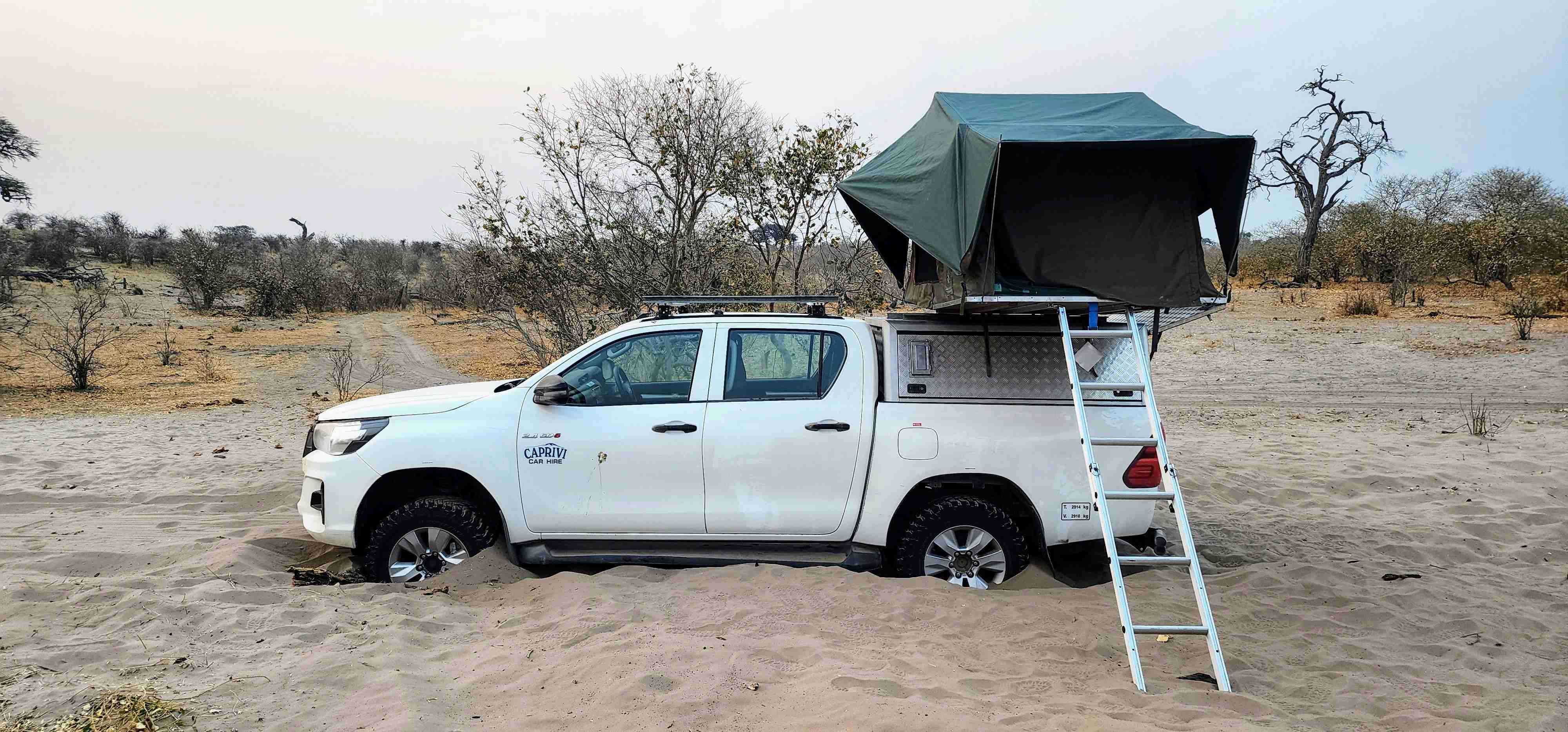
Our time in Chobe National Park was proving to be an incredible immersion in Botswana’s wilderness, but the Savuti region had more in store for us than just remarkable wildlife sightings. This area is notorious for its deep sand, a challenging terrain that would truly test our overland driving skills and the capabilities of our trusty camper. We quickly learned that when navigating these soft, shifting paths, speed and momentum are your best friends. Hesitate, and you risk losing traction and getting hopelessly stuck.
And that is precisely what happened. Despite our best intentions, we found ourselves bogged down in the unforgiving deep sands. In our initial attempts to drive out, we only dug ourselves in deeper, the tires spinning helplessly. While we could hear the distant sounds of other vehicles, stepping out into the evening hours was not an option in lion country – the risks of encountering hungry predators were far too high.
We spent what felt like hours on our satellite phone, attempting to send T9 text messages (a true test of patience in the wilderness!) and battling the weakest of signals to reach anyone who could help. As darkness fully enveloped us, with no immediate rescue in sight, we reluctantly decided to set up camp right there, preparing for an unexpected night stranded in the heart of big cat territory. It was exhilarating and stressful in equal measure.
Later, as we tried to unwind with some wine before bed, we noticed what appeared to be shifting orbs of light approaching us. Our hearts raced with a mix of trepidation and hope. We quickly switched on every available light hanging from our tent, making our presence known. To our immense relief and excitement, help had finally arrived! A group, hearing our distress calls from the satellite phone, had found us. Together, with a fierce determination, we all furiously dug out the sand from under the truck. We then strategically leveraged broken tree branches and our rubber floor mats as makeshift traction aids. Finally, with a collective push and perfectly timed acceleration, our Hilux lurched forward, breaking free from the sand pit. It was a triumphant moment born out of teamwork and sheer will.

That stressful night was a powerful, hands-on lesson. We learned invaluable skills on how to drive out of and recover from deep sand, crucial knowledge for any future overlanding adventures. It was an exhilarating and utterly memorable night that ended in a profound sense of peace and accomplishment.
That “aforementioned future” came sooner than we expected. The very next day, we found ourselves stuck again, this time in a dried riverbed. Fortunately, armed with our newly gained skills and the experience from the night before, we were able to get ourselves out of the predicament without significant issue. This second, quicker recovery was a testament to our learning curve, but it also cemented our decision: it was time to depart Savuti. The constant battle with the sand was draining, and other adventures awaited.
Unfortunately, our challenges weren’t entirely behind us. The single, narrow path heading north out of Savuti was comprised of hours of the deepest sands we had encountered yet. The truck felt like it was constantly sliding beneath the tires, making maintaining momentum critical. I found myself instinctively wanting to keep our speed above 40 km/hr, regardless of what lay ahead on the road, knowing that any significant loss of speed meant certain bogging. This strategy proved quite successful until the very last stretch, when we came upon a piece of slow-moving construction equipment. My heart sank. If I lost speed now, we would undoubtedly be stuck on this small, untraveled path for an unknown amount of time, with no immediate assistance in sight.

Spotting a slight rise, a sort of “hilltop” in the sandy expanse, we decided to pull over and wait. It was a welcome break for my white knuckles and tight grip after hours of intense, focused driving. Finally, after what felt like an eternity, we saw the tell-tale sign: the sand turned to tar. The relief was palpable! With the challenging terrain behind us, it was Todd’s turn to take the wheel, signaling the end of our intense Savuti deep-sand saga.
With the demanding journey through Savuti’s sands successfully (if strenuously) navigated, we were ready for a new landscape and new wildlife encounters. Our next destination within Chobe National Park would be the renowned Chobe Riverfront in the park’s northern reaches, promising a completely different, and hopefully less sandy, experience!
Previous <— This entry is part of a trip. Continue the story? —> Forward
Helpful Links
- Savuti Camp: When we made our way into the park, we stayed at Savuti Camp for our first night.
- Mwandi View: After we made our way out of the sands and went north towards the river, we stayed here and really liked it. We even caught up on some laundry.
- Botswana Self-Drive Guide by Tracks4Africa
- Botswana Map by Tracks4Africa
- Tips for Off-Roading at the Sand Dunes : r/4×4
- Botswana Tourism Organisation: Chobe National Park
Stepping Thru Our Story:
- Exploring Southern Africa: A Journey Through Namibia and Botswana
- Understanding Johannesburg’s Complex Past and Present
- Exploring Soweto: A Walking Tour Through History
- A Journey through Windhoek: History and Highlights
- Camping Under the Stars in Botswana’s Kalahari Desert
- Discover Wildlife in the Okavango Delta: Canoe and Safari Experiences
- Exploring Wildlife in Chobe National Park
- Navigating Chobe’s Sand: A Journey Through Savuti
- Explore Chobe Riverfront: A Wildlife Paradise
- Victoria Falls: The Mighty Wonder Between Zimbabwe and Zambia
- Exploring Victoria Falls: A Guide to Zambia’s Hidden Gems
- Driving the Caprivi Strip
- Exploring Namibia’s Etosha National Park
- Exploring Etosha: Elephants and Conservation Stories
- A Scenic Journey to Swakopmund from Etosha National Park
- Exploring the Namib Desert: A Guide to Sossusvlei and Deadvlei
- Lost in Namibia: A Travel Experience to Remember


Leave a Reply