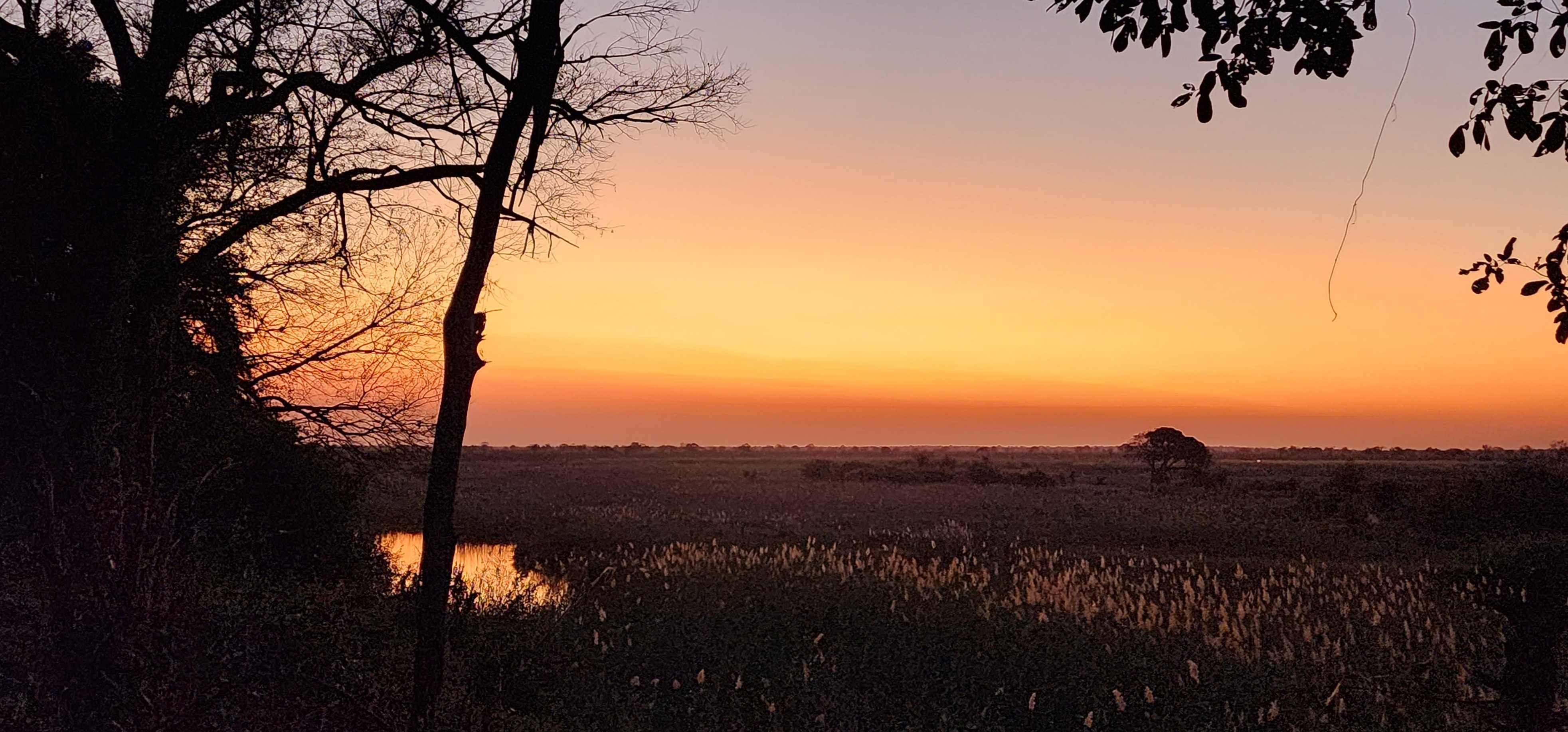
Having marveled at the sheer power of Victoria Falls from both the Zimbabwean and Zambian sides, it was time to turn our camper west once more. Our return to Namibia, however, wasn’t a direct path to its more famous desert landscapes. Instead, we embarked on a long drive across the Caprivi Strip (now officially known as the Zambezi Region) – a long and narrow panhandle of Namibia that stretches eastward, sandwiched just north of Botswana and south of Angola.
This distinctive geographical anomaly has a curious colonial history. It was established in 1890 under the Heligoland-Zanzibar Treaty to provide German South West Africa (as Namibia was then known) with access to the Zambezi River. The strategic intent was to secure a navigable route to the east coast of the African continent and German East Africa (modern-day Tanzania). However, this ambitious plan was later discovered to be impractical, as the location of the formidable Victoria Falls downstream rendered the river unnavigable for continuous passage to the Indian Ocean. Despite this, the strip remains a unique and culturally diverse part of Namibia.
Our drive across the Caprivi was long and largely flat. We spent two nights in this northern Namibian corridor, with our first stop being a truly delightful surprise on the banks of the Kwando River. Here, we were absolutely delighted by our fabulous kitchen setup at our campsite. After weeks on the road, having a well-equipped kitchen felt like a luxury, and we eagerly took advantage, making an excellent, satisfying meal on the braai as the sun dipped below the horizon. Comfortably camped right on the riverbank, serenaded by the sounds of the African night, it was a perfectly relaxing evening.

After a peaceful night’s rest, we continued our extensive drive across the Caprivi Strip. While it might be described as “anticlimactic” in terms of dramatic landscape changes compared to Namibia’s deserts, its unique position as a wetland corridor between dry lands makes it biologically rich.
Our next night brought us to the outskirts of Rundu, the capital and largest city of the Kavango-East Region in northern Namibia. Our campsite was strategically located on the banks of the Okavango River, offering us direct views across the water into Angola. It was here that we were delighted by the familiar grunts and snorts of hippos echoing into the evening. This time, however, we were treated to our very first full, unobstructed view of these magnificent creatures as one impressively pulled itself out of the water on the Angolan side. It was a privileged moment, witnessing their natural behavior up close, albeit from a safe distance across the river.

The Caprivi Strip proved to be a transitional but memorable segment of our journey, bridging the wild safaris of Botswana with the arid wonders of central Namibia. It was a chapter defined by long drives, comfortable riverside camping, and unexpected moments of natural beauty, all while offering a glimpse into a distinct cultural and geographical pocket of Southern Africa.
With the Caprivi successfully traversed, we eagerly anticipated our next major destination: our last planned safari experience at the renowned Etosha National Park, promising vast open plains and incredible wildlife viewing around its famous waterholes.
Previous <— This entry is part of a trip. Continue the story? —> Forward
Helpful Links
- Namushasha River Campsite – This is where I had my beautiful kitchen, shown above.
- Camp Hogo – This is where we camped whilst in Rundu.
- The History of Caprivi Strip in Namibia
- Border Posts & Point of Entry – Visit Namibia
Stepping Thru Our Story:
- Exploring Southern Africa: A Journey Through Namibia and Botswana
- Understanding Johannesburg’s Complex Past and Present
- Exploring Soweto: A Walking Tour Through History
- A Journey through Windhoek: History and Highlights
- Camping Under the Stars in Botswana’s Kalahari Desert
- Discover Wildlife in the Okavango Delta: Canoe and Safari Experiences
- Exploring Wildlife in Chobe National Park
- Navigating Chobe’s Sand: A Journey Through Savuti
- Explore Chobe Riverfront: A Wildlife Paradise
- Victoria Falls: The Mighty Wonder Between Zimbabwe and Zambia
- Exploring Victoria Falls: A Guide to Zambia’s Hidden Gems
- Driving the Caprivi Strip
- Exploring Namibia’s Etosha National Park
- Exploring Etosha: Elephants and Conservation Stories
- A Scenic Journey to Swakopmund from Etosha National Park
- Exploring the Namib Desert: A Guide to Sossusvlei and Deadvlei
- Lost in Namibia: A Travel Experience to Remember


Leave a Reply