
After bidding farewell to the gentle charms of Madeira, our journey continued, bringing us to the vibrant heart of Morocco: Marrakech. It’s been years since my last visit, so a reunion with the Red City felt more like an evolution than a simple return. I was eager to embrace the “shedding” process, as I like to call the transition from one culture to the next, leaving behind notions of the Western world and getting wonderfully lost in the ancient rhythms of North Africa. My hopes were high: to wander the Medina’s winding pathways, marvel at the abundance of articulated zellij (tilework), inhale the aromas of spices and herbs radiating from bustling stalls, and perhaps most accurately, immerse myself in the romantic amalgamation of it all.

Our arrival in Marrakech from the airport (RAK), after a quick layover in Lisbon, was remarkably easy. First order of business: grab some local currency, the Moroccan Dirham (MAD), as almost all the authentic experiences here operate on cash. Next, securing a local SIM card for data was crucial. We opted for Maroc Telecom, having read good reviews, though many fellow travelers seemed equally happy with Orange Maroc. Finally, it was time to make our way into the city. If your aim is the main square, as ours was, you can bypass the eager taxi drivers outside the airport and head directly to the parking lot for the number 19 bus. For 30 MAD (around 3€), it’ll whisk you straight into the heart of Jemaa el-Fnaa.
Day 0: Arriving and Acquainting Ourselves with the Red City
This wasn’t a full day of exploration, more of an introduction. We arrived earlier in the evening, so our priority was settling in. Our hostel, Riad Jennah Rouge, turned out to be perfectly located, just a very short walk from the bustling main square – a huge plus for late-night explorations.
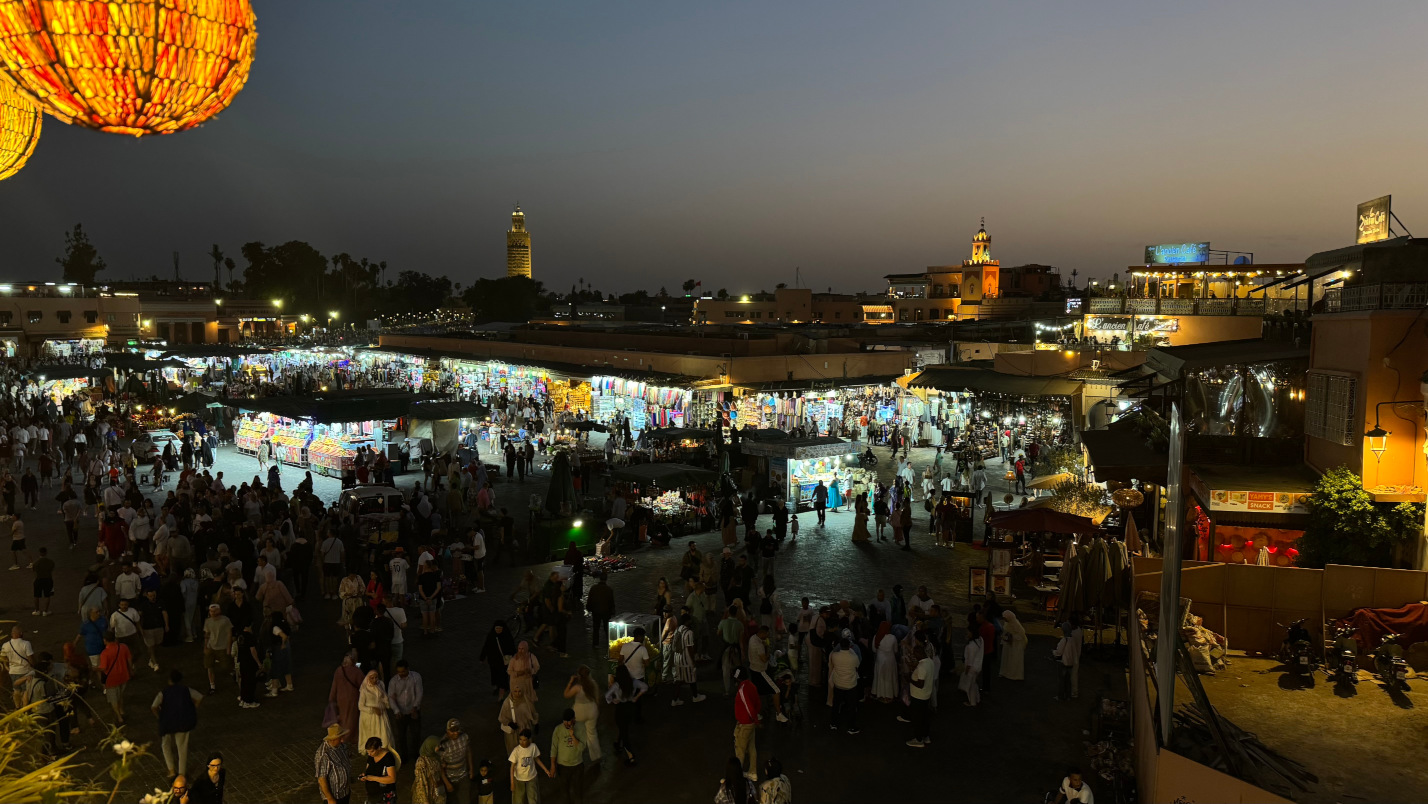
After getting checked in and dropping our bags, we couldn’t resist. We headed out to get a little lost in the Medina, letting its magnetic pull guide us. Our wanderings eventually led us to dinner at Port de Marrakech (La Porte du Marrakech), which provided a lovely, quiet terrace where we enjoyed our first authentic tajine. The fragrant stew, simmered to perfection, was the ideal welcome back to Moroccan cuisine. To close out our first evening, we took a stroll through Jemaa el-Fnaa Square. This lively spot truly comes alive after dark, where locals and tourists congregate amidst snake charmers, captivating storytellers, musicians, and a kaleidoscope of street performers. It’s a sensory overload in the best possible way.
Day 1: Diving Deep into Marrakech’s History and Culture
Our first full day began with purpose and an open mind. We joined a free walking tour with Mustapha, our fantastic local guide. I often find these tours to be an invaluable way to get acquainted with a city, helping me get my bearings, ask local questions, and gather excellent suggestions for the rest of our stay. Some of the highlights of our tour included:
- Koutoubia Mosque & Gardens: We started at the iconic Koutoubia Mosque, its impressive Almohad minaret dominating the skyline and serving as a crucial landmark in the sprawling Medina. The adjacent gardens offered a serene escape from the city’s hustle and bustle, providing a moment of calm reflection.
- Mellah (Jewish Quarter): Mustapha then led us into Marrakech’s historic Mellah. Established in 1558, this former walled quarter designated for the Jewish population immediately felt different. Unlike the labyrinthine, organic pathways of the main souks, the Mellah often features straighter, wider streets and multi-story houses with balconies overlooking the street – a notable contrast to the inward-facing riads common elsewhere. Though the majority of Marrakech’s Jewish community has since emigrated, the Mellah retains its unique character, with its market still renowned for textiles and spices, offering a distinctive peek into the diverse heritage that defines the city.
- Shopping in the Souks: We then navigated the incredibly labyrinthine souks, a vibrant maze where you can shop for an endless array of Moroccan treasures. From intricate textiles and colorful ceramics to fragrant spices and unique handicrafts, the souks are a feast for the senses. Just remember to practice your bargaining skills – it’s part of the fun!
- Jemaa el-Fnaa Square: Our tour ended back at the stunning Jemaa el-Fnaa Square, allowing us to see its daytime energy and appreciate its seamless transformation from morning market to evening spectacle.
After the walking tour, we made our way over to El Bahia Palace, a former 19th-century palace spanning eight hectares in the Moorish/Islamic style. This stunning display of 19th-century Moroccan architecture and artistry, with its intricate zellij, carved cedarwood, and vast courtyards, was a captivating journey into an era of grand ambition and intricate craftsmanship.


Since we were nearby, we made our way back over to the Mellah and visited the Miara Cemetery, one of the largest and oldest Jewish cemeteries in Morocco. Its whitewashed tombs, many dating from the 16th century onwards, created a strikingly serene and reflective landscape, offering a profound sense of peace distinct from the bustling city.
Our particular visit in late May was plagued with a particularly bad heat wave, so by mid-to-late afternoon, we always found it best to find a place indoors or at least a café to people-watch over refreshing mint tea. Finally, to close out the day, we splurged for dinner overlooking Jemaa el-Fnaa Square. While it may cost a little more, we were keen to have a view from one of the many restaurants that had terrace overlooks, allowing us to watch the square’s magical evening transformation from above.
Day 2: Embracing the Slower Pace Amidst the Heat
Day two began with a hearty breakfast at our hostel, included as part of our stay. It was pretty similar to all the other Moroccan breakfasts we encountered: a spread of coffee/tea, various local breads, eggs, honey/jam, and some yogurt. It was a lot of sugar, but it certainly provided plenty of energy for our sightseeing!
Next, we ventured to El Badi Palace. Now more of a majestic relic, its name literally meaning “Palace of the Incomparable,” this palace was built by the Saadian Sultan Ahmed al-Mansur ad-Dhahbî to celebrate his victory over the Portuguese army in the Battle of the Three Kings in 1578. Though largely stripped of its precious materials over centuries, its vast esplanade and sunken gardens still hint at its former grandeur, demanding a vivid imagination to reconstruct its past opulence.

After a short and much-needed lunch break, we made our way to the Ben Youssef Madrasa. The magnificent Ben Youssef Madrasa stands as a profound example of Islamic architecture at the heart of Marrakech. Commissioned in 1564–65 CE by the Saadian sultan Abdallah al-Ghalib, it was once the largest Islamic college in the Maghreb (Northwestern Africa, ‘the place where the sun sets’). At its height, it reportedly accommodated upwards of 800 students within its beautifully adorned walls, making it a vibrant center of learning and spiritual growth. Its intricate zellij tilework, carved stucco, and cedarwood ceilings are simply breathtaking.

By evening, the heat had really taken its toll. Todd was keen to take some evening pictures of the city, but I was quite tired from the day’s warmth. We opted for dinner on the Square again, enjoying the lively atmosphere and watching a fascinating group of vendors selling scarves, with teams of people skillfully navigating the selection.
Day 3: Gardens, Souks, and Culinary Adventures
Our third full day began with a tranquil escape at Le Jardin Secret. Beyond the bustling alleyways of Marrakech’s Medina lies this beautifully restored historical garden complex. It’s distinguished by two main sections: an Exotic Garden, showcasing a diverse array of flora from around the world, and a more traditional Islamic Garden, designed with profound symbolic and cultural elements. The garden’s very existence and aesthetic are profoundly linked to its ingenious hydraulic engineering, which we both found very interesting, drawing upon ancient underground networks known as khettaras (or qanats) that historically supplied Marrakech with vital groundwater. It’s a place where cultivated green spaces meet centuries of engineering insight. If you go, I suggest reading the signage on the hydraulics and watching the video provided.

Next, we wandered back into the heart of the souks, looking for any trinkets that we might bring home to friends and family. The Marrakech souks are an intoxicating maze of sights, sounds, and smells. Here, you’ll find everything from shimmering Moroccan lanterns and intricately designed ceramics to luxurious leather bags, hand-woven carpets, and countless varieties of local spices. Must-have items often include genuine argan oil, beautifully embroidered babouches (slippers), and fragrant saffron. Bargaining is not just accepted, it’s expected – a playful dance between buyer and seller!

Our afternoon was dedicated to a true highlight: a Marrakech Cooking Class with Locals at cookinmarrakech. Our time in Marrakech had already unfolded with delightful culinary discoveries, and building on our appreciation for local flavors (and drawing inspiration from past experiences, like a cooking class in Thailand), we decided to dive deeper. Despite prior experience with North African cuisine, the opportunity to refine my techniques and engage with others was incredibly exciting. The class began with a market visit to procure fresh ingredients, then we prepared four distinct tagines (chicken, beef, lamb, and vegetable) and two classic appetizers: aubergine salad and Tektouka, all complemented by Moroccan mint tea.

Finally, we closed the night out with drinks at Kabana Bar with friends we’d made in our cooking class. There aren’t many places in the Medina where you can get alcoholic drinks, so indulging in a couple of glasses of wine with some new friends was quite a nice way to wind down our day.
Day 4: Souk Saunters, Aromatic Discoveries, and a Farewell to Marrakech
Our final morning in Marrakech was dedicated to more leisurely wandering through the souks. After days of purposeful sightseeing and specific shopping missions, this was a time to simply absorb the atmosphere, letting the maze of alleys guide us without a strict agenda. It felt different, more relaxed, allowing us to truly appreciate the intricate details we might have rushed past before. We explored deeper into sections we hadn’t fully delved into, discovering hidden corners filled with gleaming metalwork, vibrant leather goods, and intricate wooden carvings.
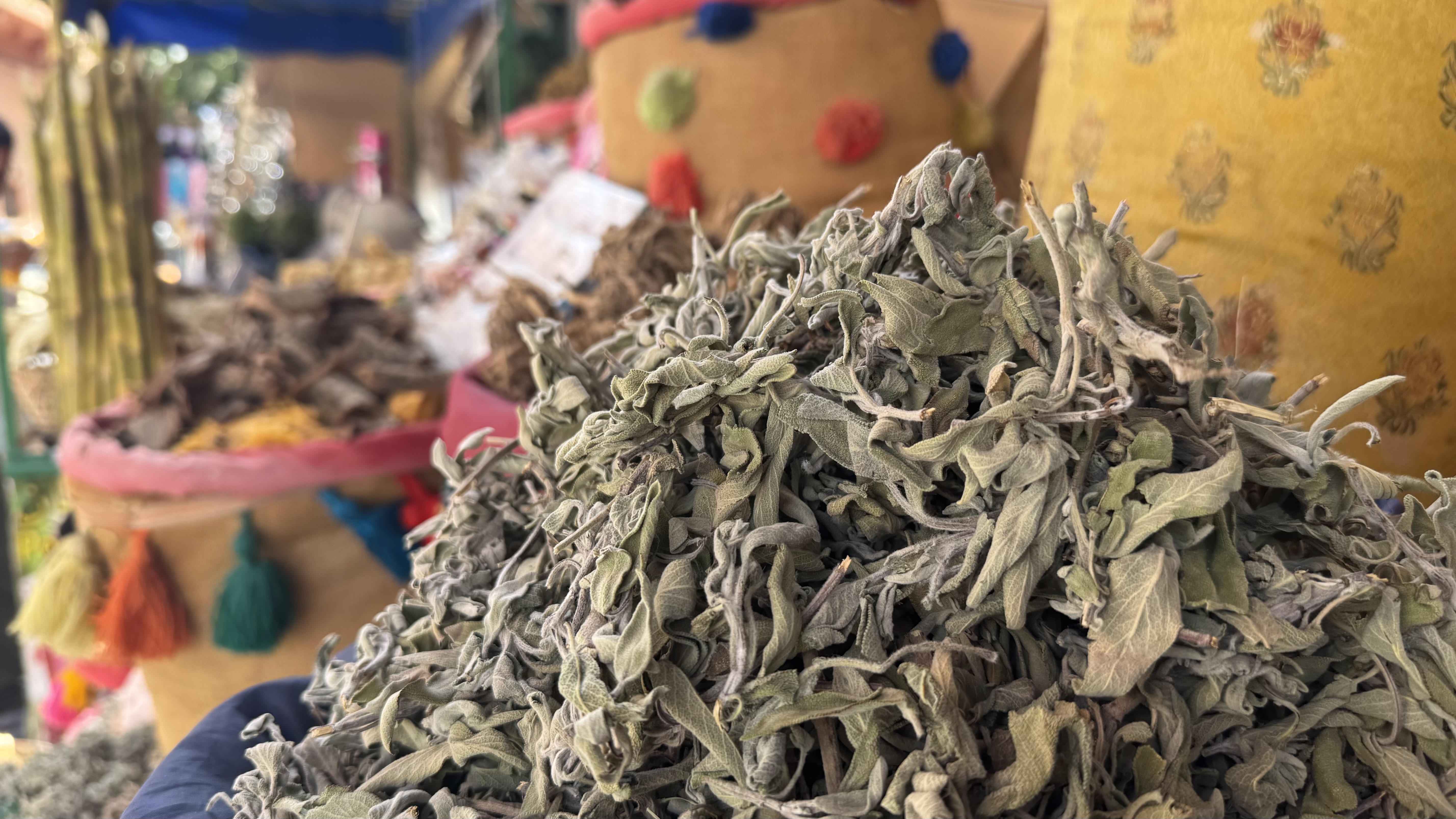
During this relaxed wander, we found ourselves pulled into a traditional herbologist’s (or apothecary) shop practically against our will. The lady who pulled us in ended up being a delight. The air was thick with the concentrated aromas of countless dried herbs, spices, and natural remedies. She eagerly described the properties and uses of various teas, from invigorating mint blends to calming herbal infusions, alongside an array of vibrant, aromatic spices piled high in conical mounds. We also saw traditional soaps made with argan oil, black olive, and other natural ingredients, as well as an astonishing collection of other natural goods, from potent tinctures and traditional beauty products to unique incense and a myriad of powders for various ailments or culinary purposes. She rubbed some eucalyptus oil on Todd that seemed to never go away. It was a fascinating glimpse into a centuries-old tradition of natural healing and well-being, deeply woven into Moroccan culture, and a delightful, unexpected discovery on our last day.
It was also during this leisurely meander that a particular piece of art caught my eye – perhaps a vibrant painting depicting a scene of Berber houses coupled on a mountain. I decided to try my hand at bartering for this one, engaging in the playful, yet firm, negotiation dance that is so central to souk culture. Despite my best efforts a, I must admit, I lost that round! It just came out to be too high, so no artwork this time.

For our last dinner, we chose Café Restaurant Dar L’hssira. This charming restaurant offered a more traditional dining experience, with a cozy atmosphere and a menu featuring classic Moroccan dishes. The food was delightful, a perfect final taste of Marrakech’s culinary richness. To truly close out our time in Marrakech, we decided to return to Kabana Bar for a couple more glasses of wine, despite it being a bit expensive and lively. It was a fitting farewell, allowing us to soak in the buzzing energy of the Medina one last time.
Finally, after four-ish great days in Marrakech, it was time to migrate someplace that had a much more mellow vibe: Imlil, a charming town nestled in the High Atlas Mountains, promising a stark, tranquil contrast to the Red City’s vibrant embrace.
This entry is part of a trip. Continue the story? —> Forward
Helpful Links
- Morocco Travel Guide: For my time in Morocco, I have gone with Lonely Planet. This links to the latest version, but don’t be afraid to save a few bucks if there is an older or used version available.
- Marrakech Bus Lines: L19 is the bus we took from the airport to main square.
- Riad Jennah Rouge: The hostel we stayed at.
- Free Walking Tours in Marrakech
- UNESCO World Heritage Site page for Medina of Marrakech
- Official Moroccan Ministry of Culture Website
- Amateur Traveler Podcast: Morocco. This is a great podcast to get yourself introduced before traveling to a location.
- Information on the September 2023 Morocco Earthquake
- Things You Can Only Buy in Morocco
- Morocco Shopping Guide: The Best Things to Buy


Leave a Reply