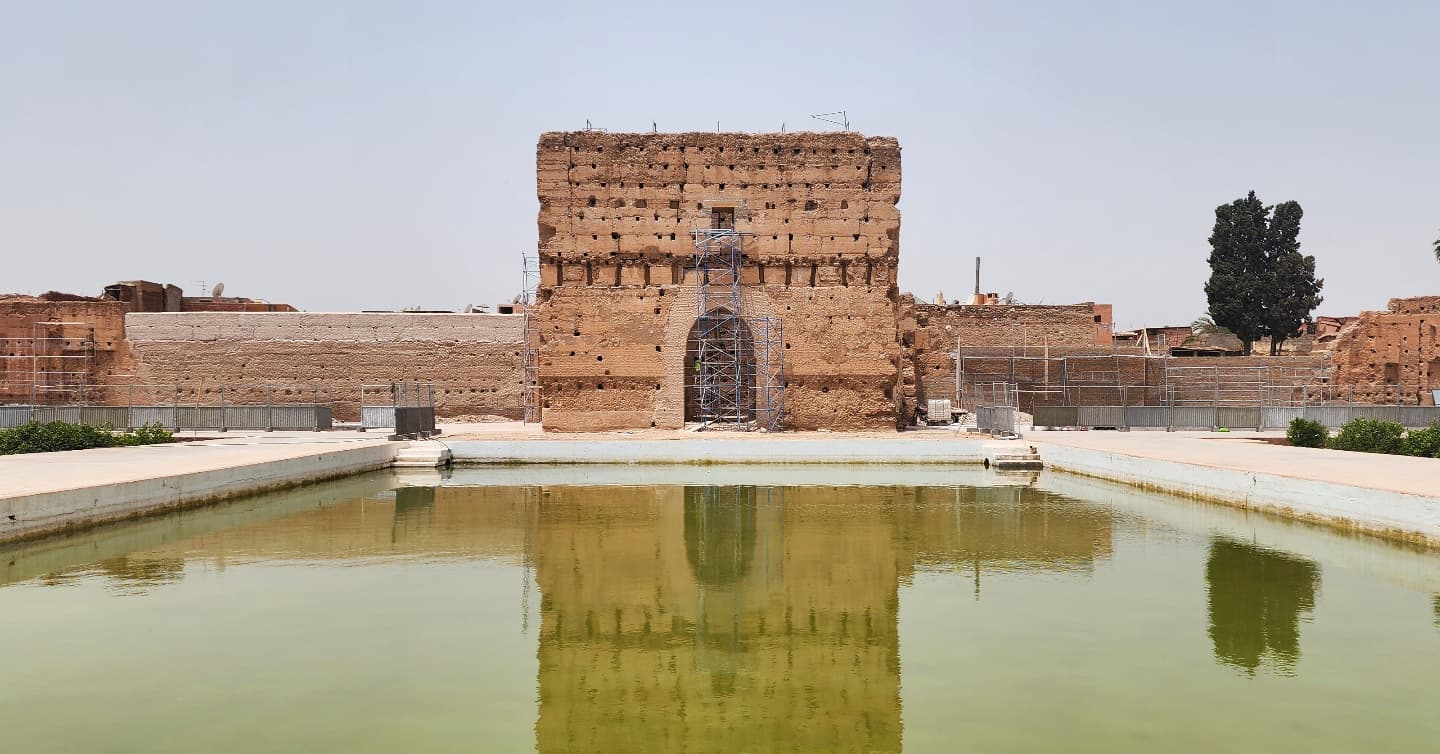
Marrakech is a city that constantly plays with your imagination, prompting you to envision past glories amidst present-day vibrancy. Few places exemplify this more profoundly than the El Badi Palace. Its very name, translating to ‘The Incomparable’ or ‘The Brilliant,’ whispers of a bygone era of immense grandeur under the Saadian dynasty. Though it stands today as a monumental ruin, its evocative remnants clearly echo the lavish display of wealth and power it once was.

Commissioned in 1578 by the ambitious Sultan Ahmad al-Mansur, El Badi was conceived not just as a residence, but as a direct declaration of the Sultan’s might and the prosperity of his reign. It was an architectural flex, designed to impress ambassadors and dazzle courtiers, solidifying his image as one of the most powerful rulers of his time.
A Symphony of Opulence: Materials and Design
Constructed over approximately 15 years, the original palace was an absolute marvel of its era, adorned with the finest materials meticulously sourced from across the globe. Imagine walking through halls shimmering with gold from Timbuktu, floors gleaming with pristine Italian Carrara marble and deep onyx, and walls inlaid with precious ivory and intricately carved cedarwood. This was a palace where no expense was spared.
El Badi featured over 300 rooms, expansive courtyards boasting large reflecting pools that mirrored the sky, and lush, sunken orange orchards that would have filled the air with sweet fragrance. It truly reflected the peak of Saadian artistry and prosperity, a harmonious blend of Moorish and Andalusian design that was both functional and breathtakingly beautiful.


From Grandeur to Ruin: The Legacy of Moulay Ismail
Sadly, the fate of such magnificent structures often hinges on the whims of succeeding dynasties. Following the decline of the Saadian dynasty in the 17th century, El Badi faced a tragic demise at the hands of the later Sultan Moulay Ismail. Rather than preserve its brilliance, he embarked on an ambitious project to build his new imperial capital in Meknes (near Fes). For decades, El Badi was systematically stripped of its valuable materials – its marble, gold, and precious timbers – all repurposed for his new city. This act of dismantling left the once-splendid palace to fall into the extensive and evocative ruins seen today. It’s a poignant reminder of how power shifts can erase even the most brilliant creations.

Resilience and Imagination: El Badi Today
Even in ruin, El Badi continues to inspire. While the palace sustained major damage in the September 2023 earthquake, extensive restoration efforts have been diligently underway, allowing El Badi to largely remain open to visitors. Today, you can wander through the remnants of its vast esplanade, explore the grand pavilions, and stroll amidst the tranquil sunken gardens, now often frequented by nesting storks.
With just a little imagination, it’s remarkably easy to envision the former scale of this complex. Stand in the central courtyard and picture the reflecting pools full, the walls vibrant with color, and the air filled with the scent of orange blossoms and the echoes of royal life. El Badi Palace isn’t just a ruin; it’s a powerful narrative of ambition, beauty, loss, and the enduring spirit of Marrakech’s historical treasures.
Previous <— This entry is part of a trip. Continue the story? —> Forward


Leave a Reply