Marrakech is a city of endless discoveries, where every winding alleyway in the Medina seems to reveal a new layer of history. During our walk tour of Marrakech, our guide, Mustapha, led us into a fascinating district I was eager to revisit: the historic Mellah, or Jewish Quarter. This distinct neighborhood, a world within a world, provided an immediate shift in atmosphere and offered a deeper understanding of the city’s diverse past.
The Mellah: A Unique Corner of the Red City
The Mellah, established in 1558 by the Saadian Sultan Abdallah al-Ghalib, was historically a walled quarter designated for the Jewish population of Marrakech. What immediately struck, and continues to differentiate it from other parts of the Medina, is its distinct architectural style and quieter, often more residential atmosphere. Unlike the labyrinthine, seemingly unplanned pathways of the main souks, the Mellah features straighter, wider streets and multi-story houses with balconies that overlook the street – a notable contrast to the inward-facing riads common elsewhere in the Medina.
While today the majority of Marrakech’s Jewish community has emigrated, the Mellah retains its unique character. Its narrower, shaded alleys are still lined with small shops, often selling traditional wares like fabrics and jewelry, and its market (the Souk el Mellah) is renowned for its spices and textiles. This shift in pace, combined with the architectural nuances, makes walking through the Mellah a different experience from the overwhelming sensory explosion of the main Medina. It feels more residential, more intimate, and laden with a tangible sense of history.
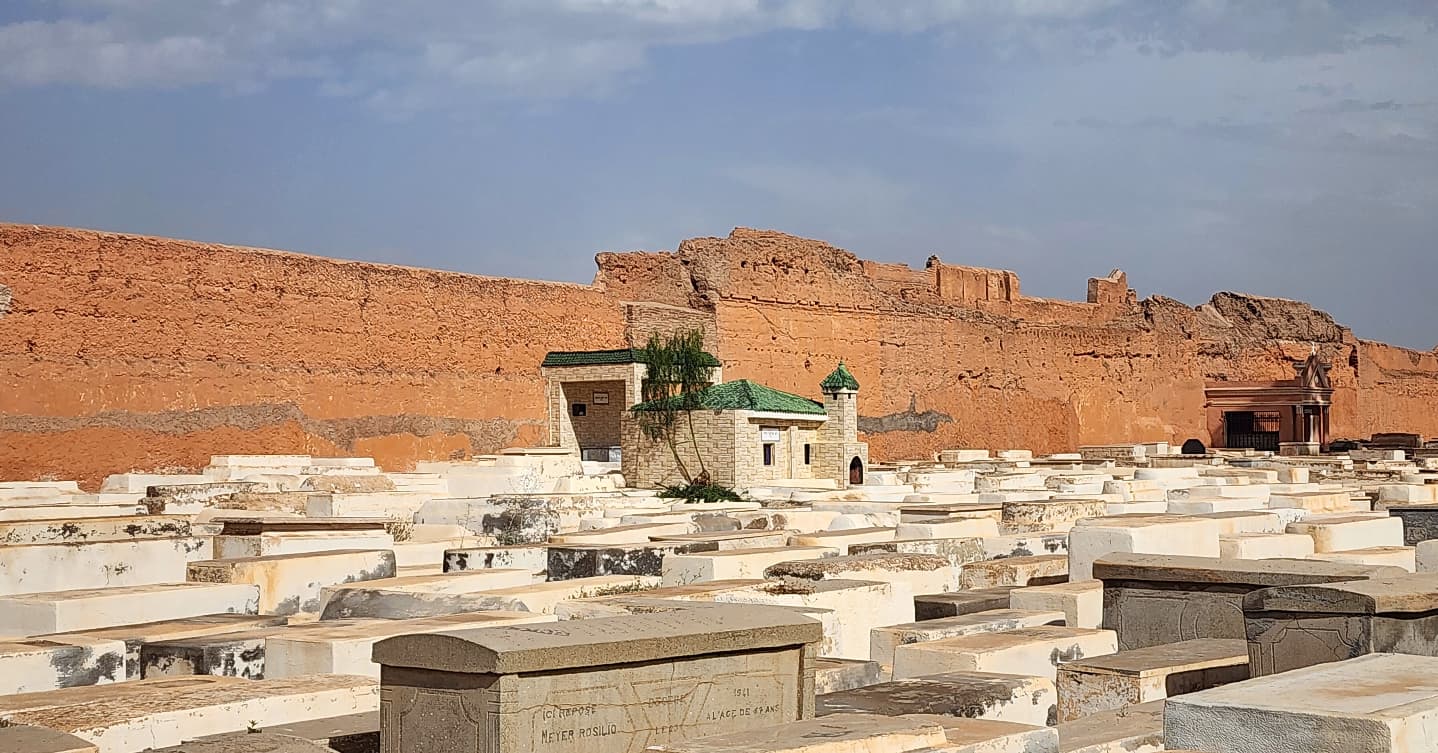
Also in the Mellah, nestled amidst the bustling energy of the Red City, lies the Miara Cemetery, a significant and remarkably serene testament to Marrakech’s long-standing Jewish heritage.

Stepping into Miara Cemetery is like entering a tranquil, hallowed space, a stark contrast to the lively souks just outside its walls. As one of the largest and oldest Jewish cemeteries in Morocco, its origins are deeply rooted in the past. While traditions suggest some burials date back several centuries, many of the distinctive, whitewashed tombs visible today are from the 16th century onwards, a testament to the enduring presence of the Jewish community in this imperial city.
A Landscape of Remembrance: Whitewashed Tombs and Sacred Ground
The cemetery is immediately characterized by its densely packed tombs, their varying sizes and simple, often unadorned designs creating a striking and reflective landscape. What sets it apart is the remarkable uniformity of the whitewashed graves. This consistent white plaster creates a serene, almost ethereal atmosphere, allowing light to play off the surfaces and enhancing the sense of peace. It’s a powerful visual, distinct from the vibrant, colorful energy of the surrounding city, inviting quiet contemplation. The sheer number of graves, some leaning against each other, speaks volumes about the generations of life that thrived within this community.


Beyond serving as a final resting place, the Miara Cemetery is an important site of pilgrimage and remembrance. The tombs of revered rabbis and saints hold particular significance, drawing visitors and devotees who come to pay their respects and seek blessings. This practice underscores the deep spiritual connection the community maintains with its ancestors and leaders, making the cemetery a living link to a rich spiritual lineage.
A Powerful Reminder of a Vibrant Community
The Miara Cemetery stands as a powerful, tangible reminder of the vibrant Jewish community that has been an integral part of Marrakech’s history and cultural fabric for generations. For centuries, Jewish artisans, merchants, and scholars contributed immensely to the city’s intellectual and economic life, coexisting within its diverse population. Though the majority of Morocco’s Jewish population has since emigrated, sites like Miara Cemetery ensure their legacy endures.

A visit to the Miara Cemetery offers profound insight into this fascinating facet of Marrakech’s multifaceted identity. It’s an opportunity to connect with a lesser-known, yet incredibly vital, part of Moroccan history, providing a deeper appreciation for the rich tapestry of cultures that have shaped this remarkable city.
Previous <— This entry is part of a trip. Continue the story? —> Forward
Helpful Links
- Marrakech Travel Guide: Must-See Attractions and Local Flavors
- Free Walking Tours in Marrakech
- UNESCO World Heritage Site page for Medina of Marrakech
- Riad Jennah Rouge: The hostel we stayed at.
- Official Moroccan Ministry of Culture Website
- Amateur Traveler Podcast: Morocco. This is a great podcast to get yourself introduced before traveling to a location.


Leave a Reply