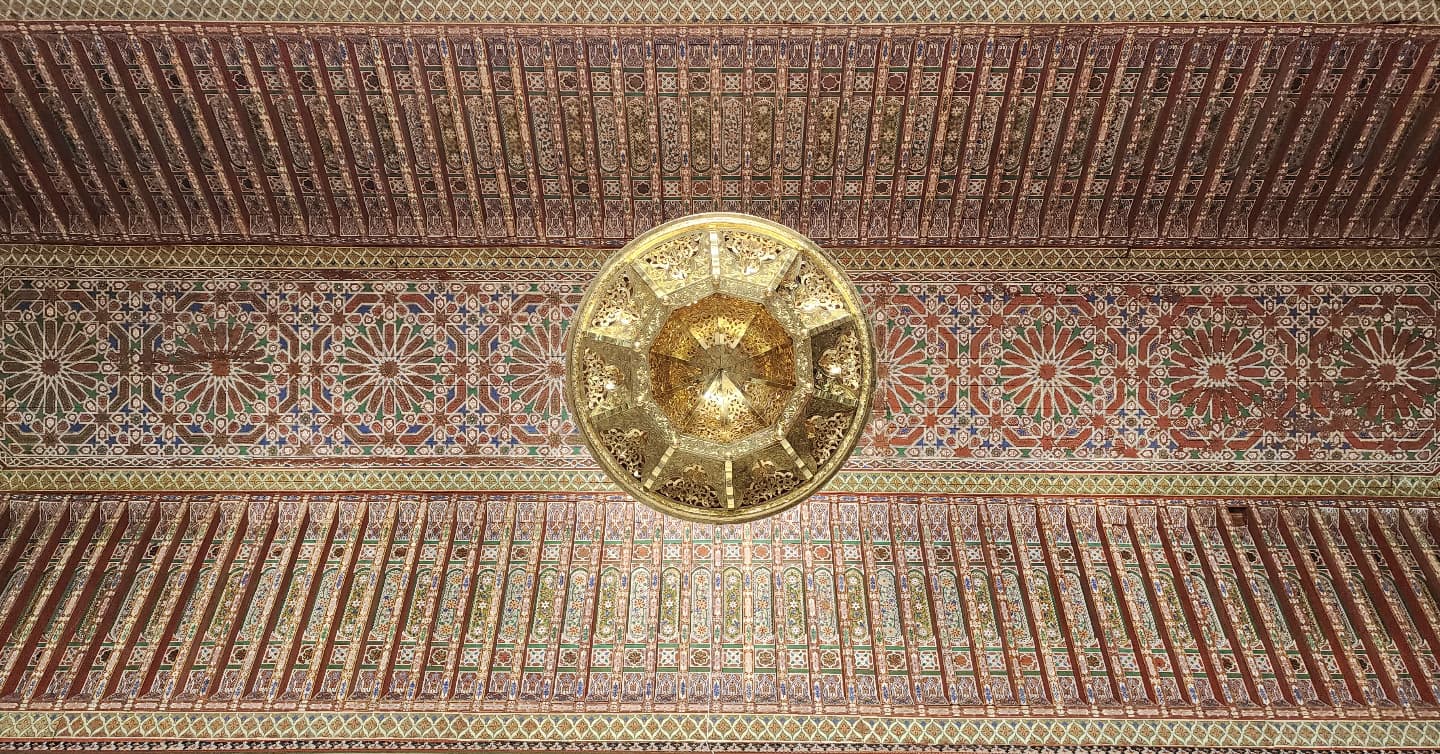
Exploring the labyrinthine pathways of the Marrakech Medina leads to discoveries of breathtaking beauty. One such discovery, a highlight of my recent return, was the El Bahia Palace. This display of 19th-century Moroccan architecture and artistry is a captivating journey into an era of grand ambition and intricate craftsmanship.

The palace’s story begins modestly in the 1860s, with its initial sections, including a magnificent riad (a traditional Moroccan house built around an interior courtyard), constructed under the direction of Si Musa. What makes Si Musa’s story interesting is his background; he was descended from a family of formerly enslaved black individuals who rose through the ranks to serve the Moroccan royal government, eventually reaching the highest offices in the country. This origin story adds a layer significance to the palace’s very foundations.
A Vision of Brilliance: Expansion by the Grand Vizier
The palace achieved its larger and more sprawling scale primarily under the direction of Si Musa’s son, who himself served as Grand Vizier from 1894 to 1900. With immense ambition, he expanded El Bahia, aiming to create the most magnificent palace of his time. The very name ‘Bahia’ itself, meaning ‘brilliance’ or ‘beautiful’ in Arabic, perfectly reflects this grand vision. To bring his dream to life, master craftsmen from all over Morocco were brought in, their collective skills evident in every intricate detail of its elaborate decoration. Their dedication transformed the palace into a living canvas of traditional Moroccan artistry.


El Bahia was not conceived as a single, unified architectural plan from its inception but rather grew organically over time into a vast, sprawling complex. This organic growth contributes to its unique charm, as each section tells a different story. The palace features a series of interconnected riads (traditional courtyard homes), luxurious apartments, and stunning courtyards, such as the vast, marble-paved Court of Honor. While the palace contains upwards of 160 rooms, a testament to its immense size, only a small fraction are opened to visitors today, each one a jewel box of design. I found the ceilings particularly beautiful and I waited for several of the rooms to clear as I tried to line up my cell phone’s camera to capture a shot at the detail.

A Legacy Preserved: Resilience Amidst Change
El Bahia Palace stands not only as a monument to past opulence but also as a symbol of resilience. Following the significant earthquake of September 2023, which impacted parts of the palace, extensive efforts have been diligently underway to restore and preserve this invaluable heritage site. This commitment to restoration underscores Morocco’s profound dedication to its cultural legacy.

Observing El Bahia today offers not only a glimpse into a past era of grandeur and artistry but also a powerful testament to the enduring strength of Morocco’s historical treasures and the nation’s unwavering commitment to their future. It’s a place where history breathes, and beauty continues to inspire.
Previous <— This entry is part of a trip. Continue the story? —> Forward
Helpful Links
- Marrakech Travel Guide: Must-See Attractions and Local Flavors
- Bahia Palace
- Official Moroccan Ministry of Culture on Bahia Palace
- Information on the September 2023 Morocco Earthquake
- Riad Jennah Rouge: The hostel we stayed at.
- Free Walking Tours in Marrakech
- UNESCO World Heritage Site page for Medina of Marrakech
- Official Moroccan Ministry of Culture Website
- Amateur Traveler Podcast: Morocco. This is a great podcast to get yourself introduced before traveling to a location.


Leave a Reply