After bidding farewell to the Atlantic charms of Madeira, our journey to Morocco continued, bringing us to a city I’ve long loved: Marrakech. It has been seven or so years since my last visit, so an exploration of its evolution was keenly anticipated. I recall vividly the intoxicating feeling of getting wonderfully lost in the Medina’s winding pathways, the mesmerizing abundance of articulated zellij (intricate tilework), the intoxicating aromas of spices and herbs radiating from the bustling souks, and most of all, the romantic amalgamation of it all. This return promised a fresh perspective on a city that had already captured my heart.
Founded near the majestic, often snow-capped Atlas Mountains in 1070, Marrakech, often affectionately called the “Red City” for its distinct sandstone architecture, is one of Morocco’s four historic Imperial Cities. Its name, likely deriving from the Berber ‘amur (n) akush’ (meaning ‘Land of God’), hints at its ancient roots and profound spiritual connection. The city serves as a vibrant bridge between a rich past and a dynamic present, where centuries-old traditions blend seamlessly with the busy, modern life.
Jemaa el-Fnaa: The Pulsating Heart of Marrakech
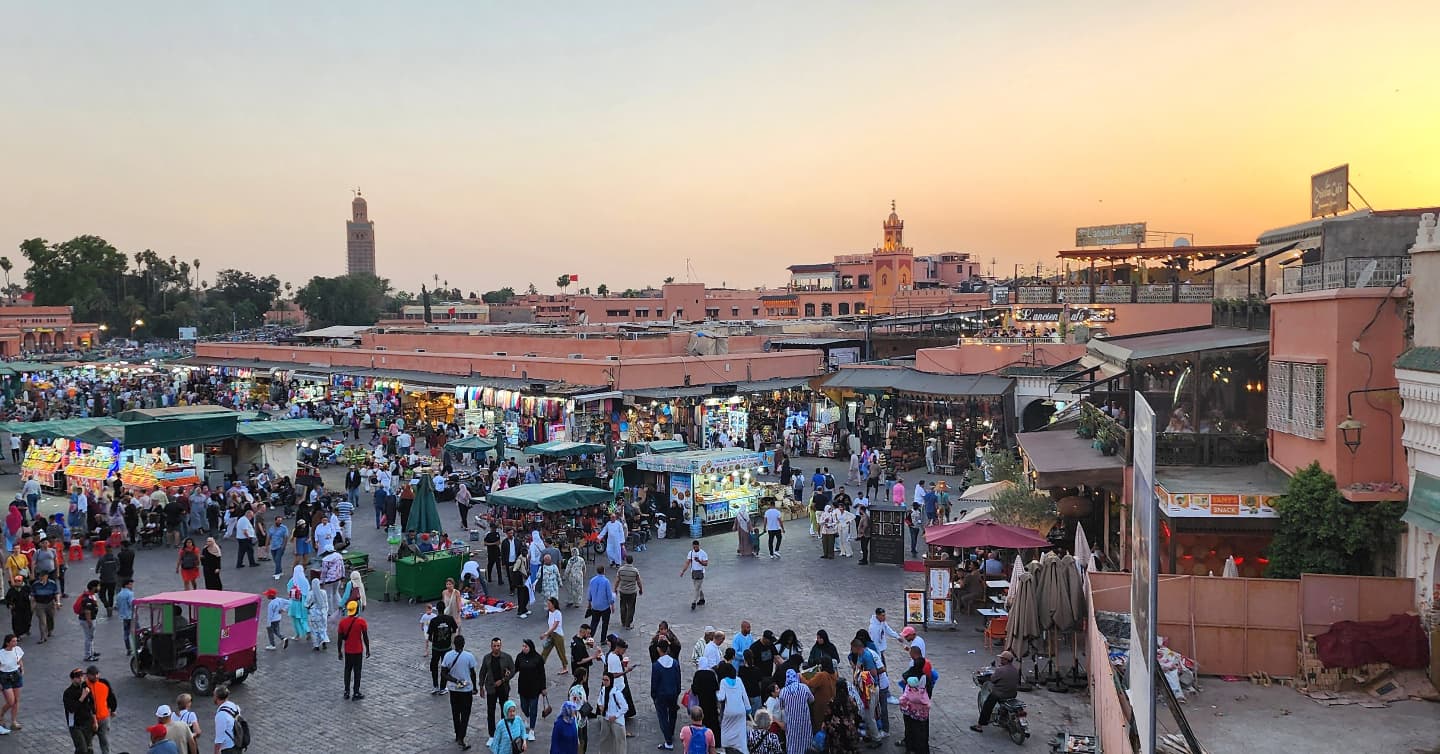
At the center of Marrakech is the main square, Jemaa el-Fnaa, which is a public square (it isn’t really square) that remains an center of city life, trade, and captivating street spectacles. By day, it’s a lively marketplace, with fruit stalls, juice vendors, snake charmers, and traditional storytellers drawing in small crowds. But as dusk descends, the square undergoes a magical transformation. It becomes a theatrical stage where acrobats tumble, musicians weave intricate melodies, and an array of inexpensive food stalls unleash mouth-watering aromas, inviting you to partake in an authentic Moroccan feast under the stars. The energy here is palpable, a true sensory kaleidoscope that changes with every hour.
Navigating the Vibrancy: A Few Tips for the Square
As you wander the square, a few words of advice for a seamless experience: like any bustling city or major public square, it’s always wise to keep a close eye on your surroundings. While I’ve personally never had an issue here, pickpockets can be a concern, especially in crowded areas like the Medina. Wearing pants with zippered pockets can be a great deterrent, and when the crowds are particularly thick, try keeping your day bag on your front or closer to your body.
Finally, and perhaps most importantly, if you plan to take a picture of any specific person or performance directly in the square – be it a snake charmer, one of the gentlemen with monkeys, or a storyteller – always ask permission first. It’s also wise to clarify any expected cost or tip upfront to avoid misunderstandings. This emphasis is for direct photography of individuals; taking a broader, general picture of the square’s atmosphere is typically fine. This small act of respect goes a long way in ensuring a positive interaction and a memorable experience.


Dominating the skyline nearby is the iconic minaret of the Koutoubia Mosque, an Almohad architectural marvel dating back to the 12th century. Its elegant proportions and intricate decorative brickwork are a stunning example of Hispano-Moresque art, serving as a spiritual beacon and a landmark for navigating the sprawling medina. Its towering presence is a constant reminder of Marrakech’s deep historical and religious significance.
The Enduring Red Ramparts: Guardians of the Medina
Encircling the Old City are the impressive red ramparts, or walls, stretching for approximately nineteen kilometers. These protective fortifications have guarded the Medina for centuries, serving as both a defensive barrier and a visual demarcation of Marrakech’s historical core. Walking alongside these imposing walls, made from the same reddish clay that gives the city its famous hue, offers a tangible connection to the past. They evoke images of ancient caravans arriving, armies marching, and the daily life that unfolded within their protective embrace. They are not only relics; they are living parts of the city, defining its character and offering a profound sense of stepping back in time.

To become re-immersed in the sensory tapestry of Marrakech is to truly experience its soul. From its bustling souks brimming with vibrant crafts, leather goods, and shimmering lanterns, to the intoxicating aromas of spices and the calls of vendors, to its profound historical depths, Marrakech promises an adventure for all the senses. My return is already proving to be a captivating journey into the heart of Moroccan culture.

Previous <— This entry is part of a trip. Continue the story? —> Forward
Helpful Links
- Marrakech Travel Guide: Must-See Attractions and Local Flavors
- Free Walking Tours in Marrakech
- UNESCO World Heritage Site page for Medina of Marrakech
- Riad Jennah Rouge: The hostel we stayed at.
- Official Moroccan Ministry of Culture Website
- Amateur Traveler Podcast: Morocco. This is a great podcast to get yourself introduced before traveling to a location.
- Things You Can Only Buy in Morocco
- Morocco Shopping Guide: The Best Things to Buy


Leave a Reply