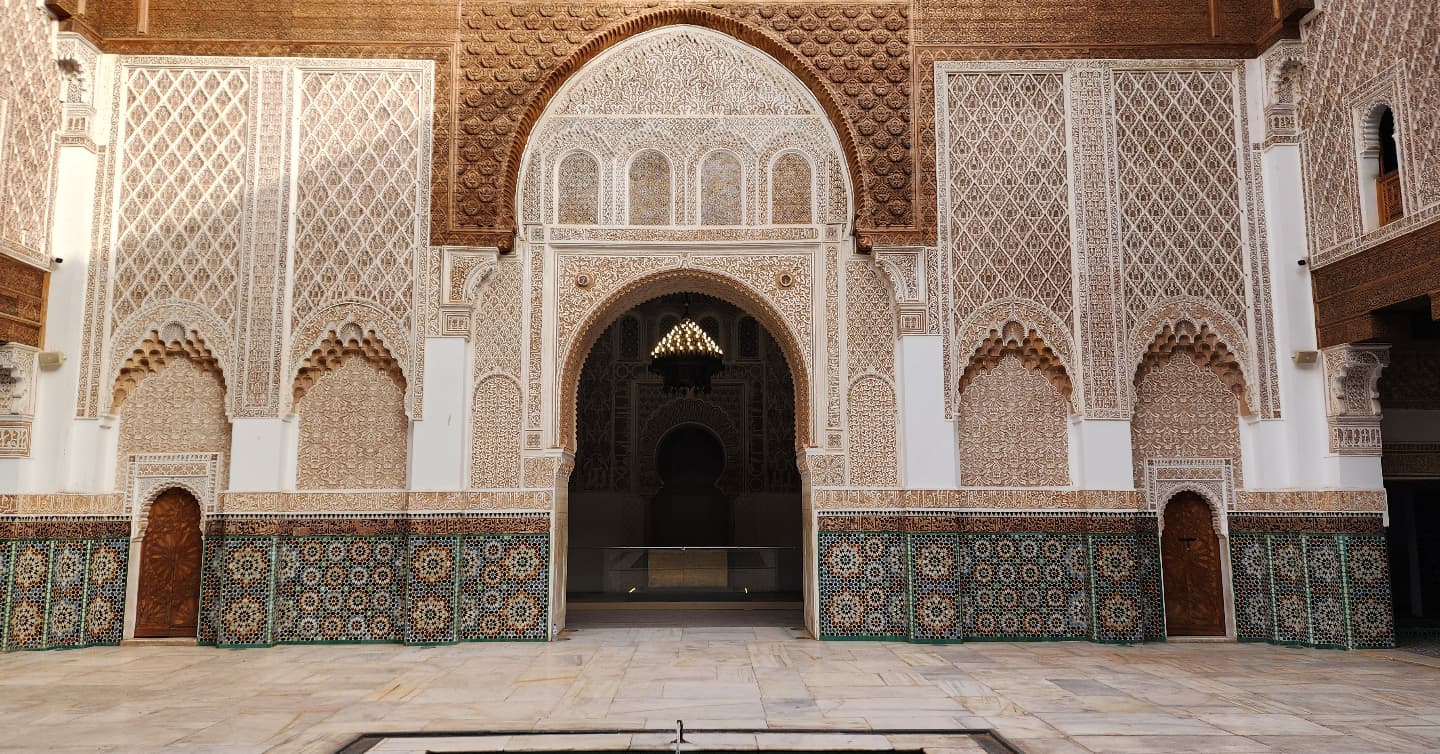
Marrakech is a city where every turn reveals a deeper layer of history and artistry. One of the most magnificent examples of this is the Ben Youssef Madrasa, standing proudly as a profound testament to Islamic architecture at the heart of the bustling Medina. Stepping through its grand entrance is like stepping back in time, both into seven years previous when I was first able to visit this lovely madrasa, but also stepping into a realm of serene beauty and scholarly pursuits that once took place here.

This revered madrasa (an Islamic school or college) was commissioned in 1564–65 CE by the powerful Saadian sultan Abdallah al-Ghalib. During its zenith, it proudly held the distinction of being the largest Islamic college in the Maghreb (Northwestern Africa, literally known as ‘the place where the sun sets’). Imagine the intellectual vibrancy within these walls; it reportedly accommodated upwards of 800 students at its height, making it a pivotal center of learning and spiritual growth for centuries.
A Design for Learning: From Grandeur to Simplicity
The madrasa’s thoughtful layout is centered around a breathtaking main courtyard, a masterpiece of design. Paved in gleaming marble, it features a large, tranquil reflecting pool that mirrors the intricate architecture above. Surrounding this central, open space, one finds richly decorated prayer halls and lecture rooms, designed to inspire contemplation and devotion.

However, the architecture also tells a story of contrasts. On the upper floors, hundreds of small, unadorned student rooms are arranged around smaller, simpler courtyards. These humble chambers, accessed by narrow corridors, offer a stark visual contrast to the communal grandeur below. This design perfectly reflects the disciplined and focused life of the students – a simple existence dedicated to study, juxtaposed with the magnificent shared spaces meant for spiritual and intellectual enrichment. It’s a powerful statement about the balance between humility and the pursuit of knowledge.
The Pinnacle of Saadian Artistry: A Feast for the Eyes
Throughout the entire complex, the pinnacle of Saadian and Moroccan craftsmanship is evident in its elaborate ornamental details. The lower walls are adorned with astonishing zellij (intricate geometric tilework), showcasing patterns so complex they seem to dance before your eyes. This is complemented by finely carved stucco on upper surfaces, forming exquisite calligraphic inscriptions and abstract patterns that speak volumes without words.


Further adding to the splendor are ornate cedarwood panels and delicate latticework screens, which grace ceilings and doorways, diffusing light and adding a sense of ethereal beauty. Perhaps most captivating are the muqarnas, the iconic stalactite carvings that resemble honeycomb, found gracing archways and domes. These intricate, three-dimensional elements create a stunning environment, a true testament to the skill of the master craftsmen who poured their souls into every detail, making the Ben Youssef Madrasa a timeless masterpiece of Islamic art.
I feel privileged to be back here.
My Own Before and After
Okay, so as I mentioned, this Madrasa stood out to me for its striking beauty the first time that I visited in 2017, as much as it did during this visit in 2025. I thought it might be fun to do a before and after, so I grabbed some pictures in the same spot for comparison. You tell me, aside from the builder looking a bit cleaner, which year is better? or am I just in the way of strikingly amazing architecture in both? You decide.


Previous <— This entry is part of a trip. Continue the story? —> Forward
Helpful Links
- Marrakech Travel Guide: Must-See Attractions and Local Flavors
- Official Moroccan Cultural Heritage Site on Ben Youssef Madrasa
- Riad Jennah Rouge: The hostel we stayed at.
- Free Walking Tours in Marrakech
- Amateur Traveler Podcast: Morocco. This is a great podcast to get yourself introduced before traveling to a location.


Leave a Reply