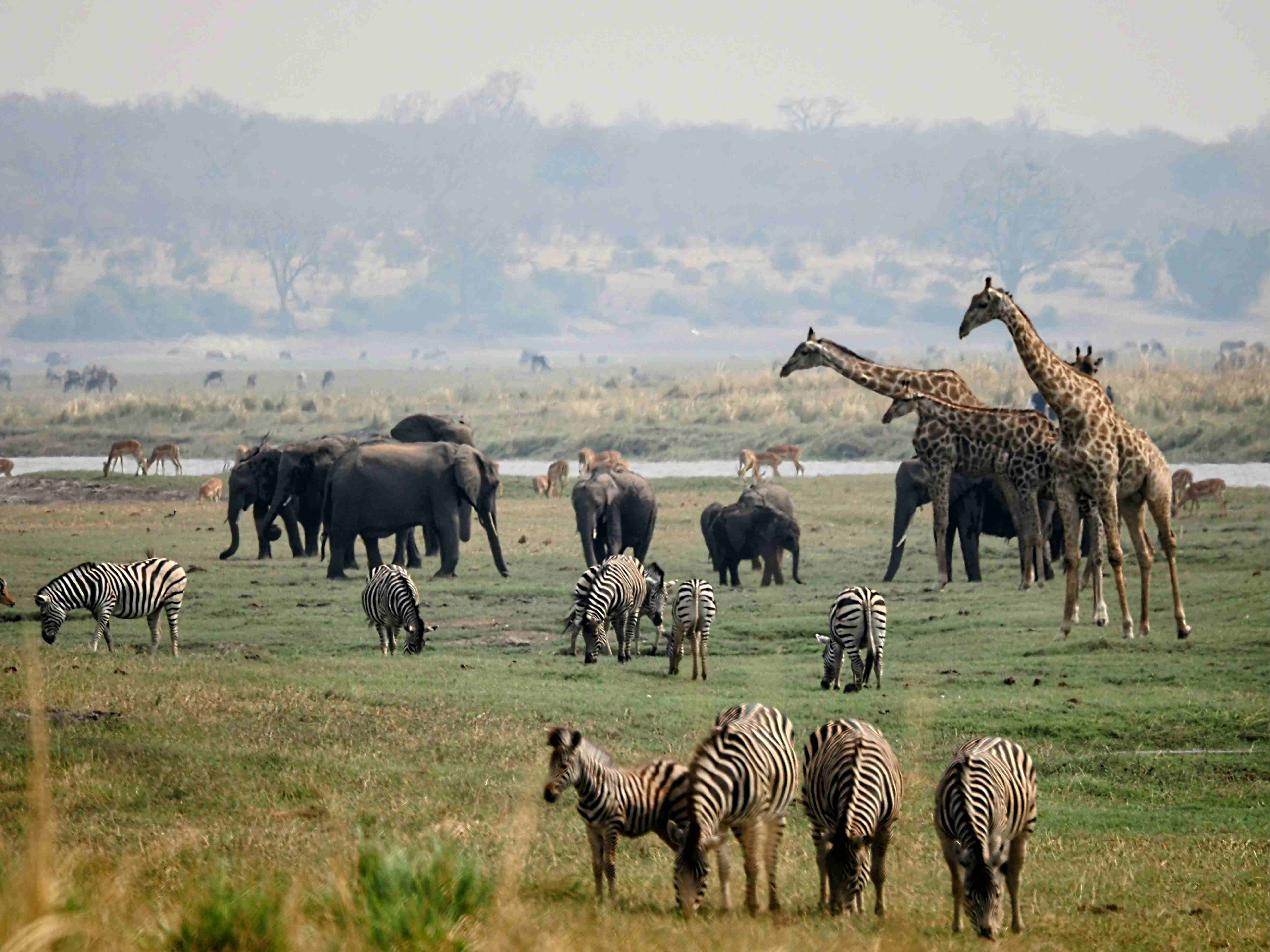
Often referred to as the “Jewel of the Kalahari,” Botswana is a land defined by its connection to water, despite its arid heart. Through its vast protected wilderness, Botswana provides some of the most exclusive and captivating safari experiences on Earth, earning it the reputation as Africa’s leading conservation success story. I hope to share my own experiences in this country’s contrasting landscapes, from the flooded Okavango Delta to the vast, arid heart of the Kalahari Desert, so that you may plan your own unparalleled lesson in ecology and the resilience of nature.
Geographically, the country is dominated by the arid Kalahari Basin, which is transformed each year by the Okavango Delta, the world’s largest inland delta. The Okavango River spills its life-giving waters onto the desert sands, flooding the region just when the dry season approaches, providing a critical source of water for the entire ecosystem.
Complementing this ecological diversity is Chobe National Park in the north, renowned for its dramatic landscapes and high concentration of wildlife, particularly along the Chobe River. It is here you will witness the famed elephant herds, the largest on the continent, congregating large groups. Botswana is home to the largest elephant population in Africa, and whether you are a dedicated birder seeking the migratory species of the Green Season or a skilled tracker focused on locating the Big Five, you will find an unrivaled density and diversity of life.
Dive into my detailed articles below to discover how you can experience all these wonders and more on your own sustainable and immersive adventure!
Know Before You Go
Language: English (Official), Setswana (Spoken by most of the population), Ikalanga, Shekgalagadi, and various Khoisan languages.
Religion: Christianity is the dominant religion with over 86% of the population. Other religions include Badimo, Islam, Hinduism, and the Baháʼí Faith.
Culture and Dress: Botswana culture values modesty, so travelers should dress conservatively, especially in rural areas. Western clothing is common in cities. Women should wear skirts or trousers that fall below the knee and cover the shoulders. Avoid overly revealing clothing.
Currency and Tipping: The currency is the Botswana Pula (P or BWP), and while tipping is not mandatory, it is customary and expected in the tourist sector. In restaurants and cities, a tip of 10%–15% for good service is standard, and rounding up a taxi fare is appreciated.
Credit Cards & ATMs: Major credit cards (Visa/MasterCard) are accepted in cities and large establishments, but cash is essential in remote safari areas, where ATMs would be sparse or non-existent.
Health and Vaccines: Yellow Fever Certificate is required if arriving from a country with risk of transmission. Routine and travel vaccinations (Hepatitis A/B, Typhoid, MMR, Tetanus) are highly recommended. Consider antimalarials and inspect repellent, especially in the wet season.
Safety: Botswana is generally safe, but travelers should protect against petty theft, especially smash and grabs. Always keep car doors locked and valuables out of sight. In safari areas, never walk alone after dark in unfenced camps and never try to approach or feed wild animals.
Outlets: Type D, G, M

Driving: On Right


When to Go
Seasons: Botswana has two major seasons: the dry season (Winter) and the wet/green season (Summer), so the time you chose depends on what you may want to see and experience.
Dry/Winter: From May thru October, the days are clear and sunny with little to no rain. The evenings can get a bit cold and the land is very dry while foliage remains sparse.
This time of year is best for viewing game on safari since the wildlife will concentrate around the few watering holes available and the foliage will not block views. Prices and the number of tourists will also be high.
Even if it seems counter intuitive, the Okavango Delta will flood during this time of year. The floodwaters of the Angolan highlands, accumulating over the last many months will finally have traversed to the delta. This is the best time for water-based experiences on the delta.
Wet/Summer: From November until April, the wet season will be hot and humid with afternoon thunderstorms. This is also when malaria risk is at it’s highest, so more consideration should be made for antimalarials.
Prices will be lower this time of year and is great for photographers and birdwatchers, thought wildlife is more dispersed, making sightings harder. You’ll work harder for those better pictures!
Travel Guides

Exploring Southern Africa: A Journey Through Namibia and Botswana
I reflect on a trip taken over a year ago, inspired by friends’ photos from southern Africa. They plan to share posts detailing their camping…
Keep reading


