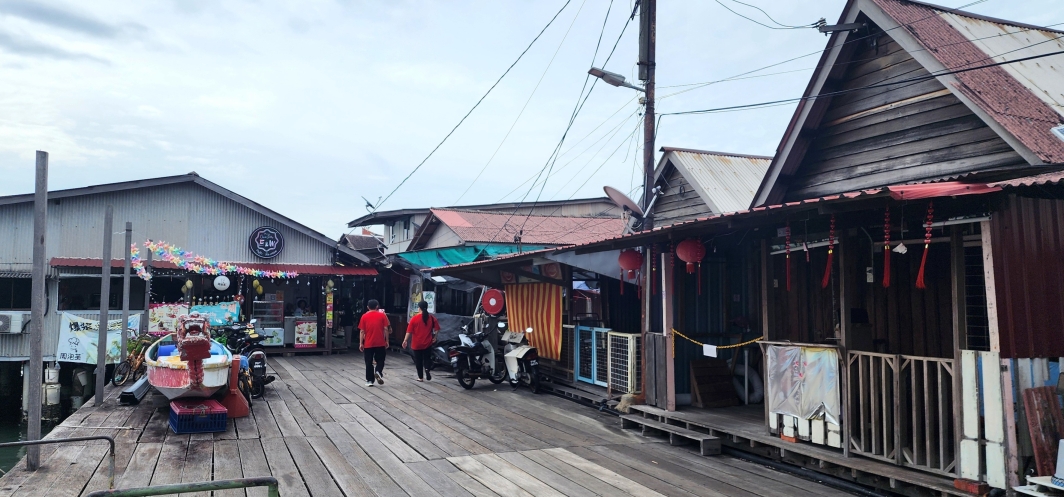
George Town holds a wealth of history on its land, but an equally rich and noteworthy past has been established over the island’s waters. The Clan Jetties of George Town are a collection of unique waterfront communities that add to the city’s colonial history. These jetties are traditional wooden houses built on stilts over the water, forming a series of small villages along the Weld Quay waterfront.

Heritage Over the Water
These settlements date back to the 19th century, when Chinese immigrants established communities based on their respective clans. Lured by the promise of work in the bustling duty-free British port – a strategic hub of the Straits Settlements – laborers, fishermen, and traders from the Fujian (Hokkien) Province in southeastern China arrived in waves (pun intended).
Facing economic hardship and instability at home, the migrants sought out and joined with others who spoke the same dialect, shared the same customs, and had the same surname. The jetties were a direct result of this, acting as a way for these immigrant communities to recreate their social and support structures in George Town. They provided a safety net for newcomers and preserved their cultural identity, which is why the Hokkien dialect is still so widely spoken in Penang today.
Today, there are seven Clan Jetties along the Weld Quay waterfront. They are recognized as part of the George Town UNESCO World Heritage Site. The houses themselves are an example of vernacular architecture, featuring simple timber construction, often with corrugated iron roofs, connected by narrow walkways that create a distinct “streetscape on the water.”

Two Worlds on the Quay: Chew and Tan
A visit to the jetties offers a unique opportunity to witness this chapter of Penang’s history. My own journey took me to two of the most prominent jetties, which offered surprisingly different experiences:
Chew Jetty: The Vibrant Introduction
My exploration, like that of many travelers, began at Chew Jetty. It is the most visited and a bustling artery of life that caters to curious visitors.

The main wooden thoroughfare is lined with homes that have opened their doors as small souvenir shops and stalls selling local snacks. Here, the distinct creak of timber underfoot mixes with the chatter of tourists and the hum of daily life. Laundry flutters in the sea breeze, and small family altars stand as quiet sentinels at doorways.

While commercially developed, Chew Jetty offers a great introduction to the architecture and spirit of these waterfront communities, a living museum where the exhibits are still in use.

Tan Jetty: The Tranquil Reflection
Yet, the true magic of the jetties reveals itself in the quieter moments, away from the main crowds. Seeking a more contemplative experience, I later made my way to the nearby Tan Jetty. The atmosphere here was a world apart. The commercial hum faded, replaced by the gentle lapping of water against the pilings and the distant sounds of the port.
It was from this peaceful vantage point that I stayed to watch the sunset. As the sun began its slow descent over the mainland, the sky erupted in hues of fiery orange and deep violet. The light shimmered across the Malacca Strait, silhouetting the rustic, tin-roofed homes and the small temple structures at the end of the pier.


Watching the day end from Tan Jetty felt like a more authentic connection to this place, a glimpse into the serene beauty that has framed the lives of its inhabitants for generations.
Practical Information for Your Visit
Getting There: The jetties are located at Weld Quay, within easy walking distance of George Town’s street art and central heritage attractions.
Cost & Support: There is no official entrance fee, but you may find donation boxes for the upkeep of the wooden walkways. Supporting the small shops is a great way to contribute to the community.
Etiquette: Remember that you are walking through people’s homes. Be respectful of their privacy, keep your voice down, and avoid peering into their houses or taking intrusive photos of residents without permission.
Best Time to Visit: Visit on a weekday or earlier in the morning to avoid the largest crowds. The jetties are particularly beautiful during the golden hours of sunrise or sunset.
Helpful Links
- Guided Tour: Find Day Tours in Penang to get the most of your time in area and meet new like-minded people.
- Read More: Learn more about my time in Penang in my post, Exploring Penang: A Culinary and Cultural Journey.
- Information and Etiquette: George Town World Heritage Incorporated


Leave a Reply